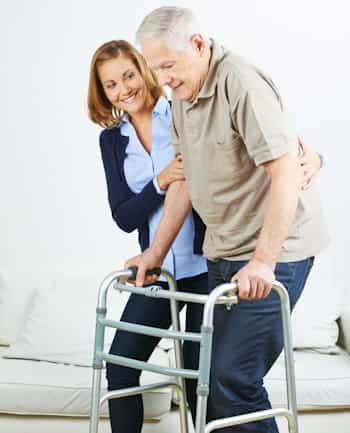



Is your elderly parent using a walking frame that seems too low? Do they push their walker too far ahead, struggle to turn in the hallway or hold onto furniture even though they have a mobility aid?
A walking stick or frame can provide valuable support, but it needs to suit the person’s strength, balance and everyday environment.
For residents looking for mobile physio in Bateman, professional physiotherapy at home can help assess walking difficulties, review mobility aid use and develop practical rehabilitation goals without the need to travel to a clinic.
At RAS Mobile Physiotherapy Perth, our AHPRA-registered physiotherapists provide home physiotherapy for older adults, private clients, and plan-managed or self-managed NDIS participants.
We support people experiencing reduced balance, muscle weakness, falls risk, neurological conditions, arthritis, post-surgery recovery and walking difficulties.
Whether you need help using a walking frame correctly, improving leg strength or becoming more confident moving around your home, treatment can be built around your individual needs.
Call 0435 267 763 to enquire about a home physiotherapy appointment in Bateman.
What Is Mobile Physiotherapy in Bateman?
Mobile physio in Bateman is physiotherapy delivered at home by a qualified physiotherapist to assess walking, balance, strength, pain and everyday mobility.
Instead of attending a physiotherapy clinic, the physiotherapist visits you in your usual living environment.
A home physiotherapy session may include:
- Walking and gait assessment
- Walking stick or frame review
- Balance testing
- Lower limb strength assessment
- Falls risk screening
- Functional transfer practice
- Post-operative rehabilitation
- Post-hospital recovery
- Neurological rehabilitation
- Pain and arthritis management
- Individualised home exercise programs
- Family and carer education when appropriate
Home physiotherapy is particularly useful when a person struggles with activities that are difficult to reproduce in a clinic.
For example, someone may manage walking in a straight line but have trouble turning their frame around the kitchen table or moving through a bathroom doorway.
A home visit allows the physiotherapist to observe these challenges directly.
When Should Someone Consider Using a Walking Aid?
Walking aids can improve stability and support movement for people experiencing physical limitations.
However, using a walking aid should be based on an appropriate assessment rather than assuming one device suits everyone.
A person might benefit from a walking aid if they:
- Feel unsteady while walking
- Have experienced a fall or near fall
- Have reduced lower limb strength
- Experience pain during walking
- Are recovering after surgery
- Have a neurological condition affecting balance
- Have difficulty walking longer distances
- Need additional support during everyday activities
A mobility aid may reduce physical demands or provide additional support, but it does not necessarily correct the underlying cause of a walking problem.
For example, a walking frame may improve stability while someone also needs strengthening and balance rehabilitation.
The aim is to choose the safest appropriate strategy for the individual.
Common Types of Walking Aids
Different mobility aids provide different types and levels of assistance.
1. Walking sticks
A walking stick may be appropriate for someone who needs a relatively small amount of additional support.
The suitability of the device depends on strength, balance, coordination and the person’s condition.
2. Pick-up walking frames
A pick-up frame has legs that contact the floor and is repositioned during walking.
It may provide greater stability for some individuals, but lifting or advancing the frame requires appropriate strength and coordination.
3. Front-wheeled walking frames
These generally have wheels at the front, allowing the frame to move differently from a standard pick-up frame.
They may be suitable for certain walking patterns and physical limitations.
4. Four-wheeled walkers or rollators
Four-wheeled walkers typically have wheels, handles and brakes. Some include a seat.
These devices may improve mobility for suitable users, but they require sufficient control, coordination and an understanding of safe brake use.
A rollator is not automatically the safest choice for someone with poor balance.
5. Forearm-support walking aids
Some walking aids offer forearm support and may be appropriate for people with particular postural, balance or upper limb needs.
Specialist equipment may require assessment by a physiotherapist or occupational therapist.
Which walking aid is best?
There is no single best walking aid for every person.
A physiotherapist considers the individual’s medical condition, strength, balance, walking pattern, home environment and ability to operate the device.
The aim is to support safe and functional mobility.
7 Signs Your Walking Frame May Need Reviewing
If you or a family member already uses a walking aid, the following signs may suggest that a professional review is worthwhile.
1. The frame appears too high or too low
An incorrectly fitted walking aid may encourage uncomfortable positioning or reduce the person’s ability to use it effectively.
Appropriate height depends on the individual and the specific equipment.
A physiotherapist can check whether adjustments are needed.
2. The person walks too far behind the frame
Some people push their walking frame too far forward and then struggle to maintain a stable position.
The appropriate positioning and walking sequence depend on the device and the user’s needs.
A physiotherapist can observe the walking pattern and teach suitable techniques.
3. The walker moves unexpectedly
Unexpected movement can be particularly concerning with wheeled walking aids.
Possible issues include worn brakes, unsuitable equipment, poor control or difficulty using the device.
A professional review may help identify the problem.
4. The person struggles to turn
Turning requires balance, coordination and suitable walking aid handling.
Difficulty turning around furniture, through doorways or in narrow rooms may increase the risk of losing balance.
5. They hold onto furniture instead of using the aid
Some people leave their walking frame behind when moving short distances.
They may then rely on furniture, benches or walls for support.
This can indicate that the device is inconvenient, difficult to use or not suitable for the home environment.
6. Standing or sitting with the walker feels unsafe
A person may try to pull themselves up using a wheeled walking aid or sit before they are properly positioned.
These actions can be unsafe if the device moves or is used incorrectly.
Safe transfers should be taught according to the person’s ability, chair and equipment.
7. The person has experienced a fall or near fall while using the device
A fall while using a walking aid does not necessarily mean the equipment itself caused the incident.
The person may have problems with balance, strength, coordination, footwear, vision or other medical factors.
However, a fall or repeated near fall is a good reason to review mobility and equipment use.
What Happens During a Walking-Frame Assessment at Home?
A physiotherapy assessment should consider both the person and the equipment.
Step 1: Understanding the walking difficulty
Your physiotherapist may ask:
- Why are you using the walking aid?
- How long have you used it?
- Have you fallen recently?
- Do you feel confident walking?
- Do you experience pain, dizziness or fatigue?
- Are there particular areas of the house where walking is difficult?
Step 2: Assessing physical ability
Depending on your condition, the physiotherapist may assess:
- Muscle strength
- Standing balance
- Walking pattern
- Coordination
- Joint movement
- Transfers
- Functional endurance
Step 3: Reviewing the mobility aid
The physiotherapist may check:
- General suitability
- Height and positioning
- Brake operation, where applicable
- Condition of relevant components
- How the person handles the device
- Walking and turning technique
- Suitability for the home environment
Damaged or faulty equipment should not continue to be used without appropriate review.
Step 4: Practising functional movement
Where safe, the assessment may involve walking around the home, turning through doorways or practising transfers.
Step 5: Developing a management plan
Recommendations may involve walking technique education, strengthening, balance training, further equipment assessment or referral to an occupational therapist.
The aim is not simply to adjust a walker. It is to improve how the person moves in everyday life.
Walking Safely Around Your Home
A walking aid may work well in one environment but be difficult to manage elsewhere.
Common challenges include narrow hallways, low furniture, bathroom layouts, loose rugs and entrance steps.
Walking through narrow spaces
Some walkers may not fit comfortably through particular doorways or between furniture.
A home assessment can identify where mobility is difficult and whether alternative arrangements need consideration.
Turning around furniture
People may become unsteady when turning or changing direction.
A physiotherapist can assess the turning technique and provide suitable practice.
Standing from a chair
Transfers should be performed using an appropriate technique for the person and their walking aid.
A wheeled walking frame should not be relied upon as a fixed support when standing if it could roll or move.
Managing brakes
For a walking aid fitted with brakes, the person should understand how to operate them correctly.
Brake function should also be checked according to the equipment instructions.
Bathroom access
Bathrooms may present challenges because of limited space, wet surfaces and difficult transfers.
Some concerns require occupational therapy assessment or equipment changes.
Stairs and entrance steps
Walking frames and rollators are not automatically suitable for use on stairs.
A physiotherapist should assess whether a person can manage steps safely and what assistance or alternative arrangements are needed.
Do not attempt to use a walking frame on stairs without individual professional assessment and appropriate instruction.
Falls Prevention Physiotherapy in Bateman
Falls can occur for many reasons.
Reduced strength and poor balance are common physical factors, but falls may also involve dizziness, medications, impaired vision, unsuitable footwear or environmental hazards.
Home physiotherapy can address some of these risks.
What does a falls prevention assessment involve?
Depending on the person’s needs, assessment may include:
- History of falls and near falls
- Standing balance
- Muscle strength
- Walking pattern
- Turning ability
- Functional transfers
- Mobility aid use
- Relevant home safety concerns
Standardised measures such as the Timed Up and Go test may be used when suitable.
How can physiotherapy help?
Treatment may include progressive strengthening, balance exercises, walking practice and education about mobility aid use.
Other risk factors may require review by a GP, pharmacist, optometrist or occupational therapist.
No physiotherapy program can guarantee that someone will never fall, but appropriate intervention can help address modifiable risk factors.
Aged Care Physiotherapy in Bateman
Older adults may begin using walking aids because of arthritis, weakness, reduced balance or mobility changes following illness.
RAS Mobile Physiotherapy Perth provides home physiotherapy for seniors with appropriate physical rehabilitation needs.
Our aged care physiotherapy services may help with:
- Walking frame and walking stick use
- Leg strengthening
- Falls prevention
- Balance rehabilitation
- Chair and bed transfers
- Arthritis-related mobility difficulties
- Post-hospital recovery
- Maintaining independence
- Walking confidence
- Home exercise programs
Example: An older adult using a four-wheeled walker
An older adult in Bateman may have recently started using a four-wheeled walker.
Their family notices that the person struggles to turn around furniture and is uncertain how to manage the brakes.
A physiotherapist could assess walking, balance, strength, brake use and transfers.
Treatment may involve education, suitable exercise and further equipment recommendations if necessary.
The goal is to support safer movement and confidence, rather than encouraging independence beyond the person’s capacity.
Can aged care funding cover physiotherapy?
Eligible older Australians may access physiotherapy through approved aged care arrangements, including the Support at Home program.
The program includes physiotherapy as a clinical support for eligible people with assessed needs.
Access depends on assessment, approved services, available funding and provider arrangements.
The Restorative Care Pathway may also provide short-term coordinated rehabilitation for eligible older people following illness or injury.
NDIS Physiotherapy in Bateman
RAS Mobile Physiotherapy Perth works with plan-managed and self-managed NDIS participants in Bateman and nearby suburbs.
Home-based NDIS physiotherapy may help address appropriate disability-related mobility goals.
These may include:
- Walking and balance
- Muscle strength
- Functional transfers
- Mobility aid use
- Neurological rehabilitation
- Physical endurance
- Postural control
- Functional independence
- Home exercise programs
- Support worker education where appropriate
Mobility aid goals for NDIS participants
An NDIS participant may use a walking frame indoors and a wheelchair for longer distances.
Physiotherapy may focus on maintaining safe walking ability, improving transfers and working towards meaningful functional goals.
Where appropriate, the physiotherapist may recommend further mobility equipment assessment.
What about NDIS funding for walking aids?
Certain mobility aids and related assessments may be funded under NDIS assistive technology arrangements when eligibility and funding criteria are met.
However, an item or equipment recommendation is not automatically approved or funded by the NDIS.
The type of equipment, supporting evidence, relevant funding category and applicable NDIS rules matter.
Can plan-managed and self-managed participants use RAS?
Yes, where physiotherapy is an appropriate eligible support.
RAS is not an NDIS-registered provider and therefore works with plan-managed and self-managed participants rather than NDIA-managed funding for its unregistered services.
The suitability of the support and funding arrangements should be confirmed before treatment.
Post-Surgery and Post-Hospital Rehabilitation
A walking aid may be recommended temporarily after surgery or hospitalisation.
Some people need additional stability while they recover strength, mobility and confidence.
Knee replacement rehabilitation
Physiotherapy may include knee movement, strengthening, walking practice and safe transfers.
Use of walking aids must respect the treating team’s instructions and the person’s recovery stage.
Hip replacement rehabilitation
Home physiotherapy may focus on safe mobility, transfers, appropriate strengthening and progression of walking.
Any post-operative precautions must be followed.
Recovery after illness
Someone returning home after a medical admission may feel weak, unsteady or tired.
Rehabilitation may include gradual strengthening, walking practice, balance exercises and endurance training.
Should you stop using a walker as soon as you feel better?
Not necessarily.
A walking aid should only be reduced or discontinued when assessment indicates the person can move safely with less support.
Stopping too early may increase falls risk.
For some people, continuing to use a mobility aid is an appropriate long-term safety strategy.
Neurological Physiotherapy at Home
Neurological conditions can affect balance, muscle strength, coordination and walking.
Home-based physiotherapy may support people with:
- Stroke
- Parkinson’s disease
- Multiple sclerosis
- Acquired brain injury
- Spinal cord injury
- Cerebral palsy
- Other conditions affecting mobility
Following a stroke, physiotherapy may focus on walking practice, strength, balance, transfers and appropriate mobility aid use.
For people with Parkinson’s disease, treatment may involve gait strategies, turning, balance rehabilitation and functional exercises.
For people with multiple sclerosis, the program may address mobility, strength and fatigue-related limitations.
Treatment is individualised according to clinical needs and goals.
Physiotherapy for Arthritis, Pain and Reduced Mobility
Pain may affect how someone walks or uses a mobility aid.
For example, knee arthritis may make walking uncomfortable, while shoulder pain can interfere with gripping or controlling a walking frame.
A physiotherapist can assess the interaction between pain, strength, balance and walking ability.
Treatment may include therapeutic exercises, movement education, gradual strengthening, functional mobility training and hands-on interventions where appropriate.
The aim is to improve or maintain physical function while managing symptoms appropriately.
Exercises That May Support Safer Walking
A walking aid can provide support, but physical rehabilitation may also be important.
The following exercises are examples of activities that may be included in a tailored program.
| Exercise | Potential purpose |
|---|---|
| Supported sit-to-stand | Improve leg strength and transfers |
| Seated knee extensions | Strengthen quadriceps |
| Supported heel raises | Improve calf strength |
| Seated marching | Promote hip movement and muscle activation |
| Supported weight shifting | Improve standing control |
| Side stepping with support | Improve lateral strength and balance |
| Supervised turning practice | Improve functional turning |
| Walking practice | Improve gait and endurance |
Exercise selection, repetitions and supervision depend on clinical assessment.
People with significant balance problems should not attempt unsupported standing exercises without suitable guidance.
What Happens During Your First Home Physiotherapy Appointment?
Your first appointment generally begins with a discussion of your symptoms, medical history, mobility concerns and personal goals.
The physiotherapist may assess:
- Walking and balance
- Muscle strength
- Joint movement
- Functional transfers
- Mobility aid suitability
- How the walking aid is used
- Relevant home mobility challenges
Treatment may begin during the first appointment when appropriate.
You may receive an individualised exercise program, advice about mobility aid use and recommendations for further treatment.
For equipment concerns outside the scope of physiotherapy, referral to an occupational therapist or equipment specialist may be recommended.
Funding and Payment Options
RAS Mobile Physiotherapy Perth offers home physiotherapy for several funding arrangements.
Private clients
Private clients can generally book physiotherapy directly without needing a GP referral.
NDIS clients
We work with plan-managed and self-managed NDIS participants where physiotherapy is an appropriate disability-related support.
Aged care clients
Physiotherapy may be available through approved Support at Home arrangements or other eligible aged care pathways.
Private health insurance
Some private health insurance policies may provide physiotherapy benefits. Clients should check coverage and provider eligibility with their insurer.
Appointment costs
Fees depend on the type of appointment and funding pathway. Any applicable travel fees should be confirmed before booking.
Contact RAS Mobile Physiotherapy Perth for current appointment fees and availability.
Mobile Physio Bateman and Nearby Suburbs
RAS Mobile Physiotherapy Perth provides home visits in Bateman and surrounding areas, subject to service coverage and appointment availability.
Nearby locations include:
- Bull Creek
- Brentwood
- Murdoch
- Winthrop
- Leeming
- Booragoon
- Mount Pleasant
- Kardinya
- Rossmoyne
- Willetton
- Riverton
- Shelley
- Applecross
- Ardross
- Alfred Cove
- Myaree
- Melville
- North Lake
- Jandakot
- Canning Vale
Bateman includes established residential streets, with nearby locations such as Bill Ellson Reserve and Piney Lakes Reserve.
Bill Ellson Reserve includes footpaths and seating, while Piney Lakes Reserve borders Bateman. These can provide local context for discussions about outdoor mobility.
However, not every outdoor path is suitable for someone using a walking frame.
Before progressing to outdoor walking, the physiotherapist should consider the person’s balance, endurance, walking aid, surface conditions and safety.
Residents near Mandala Crescent, Bateman Primary School, Leach Highway, South Street and surrounding Bateman residential areas can contact the team to confirm home visit availability.
Why Choose RAS Mobile Physiotherapy Perth?
RAS Mobile Physiotherapy Perth provides:
- AHPRA-registered physiotherapists
- Home-based mobility assessments
- Walking aid education and review
- Falls prevention
- Strength and balance rehabilitation
- Aged care physiotherapy
- Plan-managed and self-managed NDIS physiotherapy
- Post-hospital rehabilitation
- Post-operative physiotherapy
- Neurological rehabilitation
- Pain and mobility management
- Individualised home exercise programs
- Family and carer education where appropriate
Our approach focuses on meaningful functional goals.
For one client, this may mean using their walking frame more safely. For another, it may mean improving chair transfers, walking confidence or maintaining independence with appropriate support.
Frequently Asked Questions About Mobile Physio Bateman
1. Do you provide mobile physiotherapy in Bateman?
Yes. RAS Mobile Physiotherapy Perth provides home visit physiotherapy in Bateman, WA, subject to appointment availability.
2. Can a physiotherapist check whether my walking frame is suitable?
Yes. A physiotherapist can assess your walking, balance, physical needs and how you use your walking frame, then provide appropriate advice or referral.
3. How do I know if my walking frame is the correct height?
A physiotherapist can check the frame’s fit and positioning according to your body measurements, condition and the particular device.
4. Is a four-wheeled walker safer than a standard walking frame?
Not necessarily. Different walking aids suit different levels of strength, balance and coordination. An individual assessment is recommended.
5. Can a physiotherapist help me use the brakes on my walker?
Yes. A physiotherapist can assess your ability to operate the brakes and provide relevant instruction. Faulty equipment may require repair or replacement.
6. Can walking frames be used on stairs?
Walking frames are not automatically suitable for stairs. Stair use requires an individual mobility and safety assessment, and alternative strategies may be necessary.
7. Can physiotherapy reduce my risk of falling?
Physiotherapy may help address modifiable falls risk factors through balance training, strengthening, walking practice and mobility education.
8. Is home physiotherapy suitable for elderly people?
Yes. Home physiotherapy may help older adults with reduced strength, poor balance, arthritis, walking problems or difficulty attending a clinic.
9. Do you provide NDIS physiotherapy in Bateman?
Yes. RAS supports plan-managed and self-managed NDIS participants with appropriate disability-related physiotherapy needs.
10. Can NDIS funding cover a walking aid?
Some mobility aids may be funded through NDIS assistive technology arrangements, depending on the participant’s needs, available funding and applicable rules.
11. Can aged care funding cover physiotherapy at home?
Physiotherapy may be available through approved aged care arrangements, including Support at Home for eligible older Australians.
12. Can physiotherapy help after knee or hip replacement surgery?
Yes, when clinically appropriate. Home physiotherapy may include walking practice, strengthening, safe transfers and mobility aid training while following surgical precautions.
13. Can mobile physio help after a stroke?
Yes. Home stroke rehabilitation may address walking, balance, transfers, strength and suitable mobility aid use.
14. Can a physiotherapist help if my walker does not fit through my bathroom door?
A physiotherapist can assess the mobility problem and recommend appropriate strategies or further equipment assessment. An occupational therapist may be needed for home modifications.
15. Do I need a GP referral?
Private physiotherapy generally does not require a GP referral. Some funded programs may have additional requirements.
16. How do I book mobile physio in Bateman?
Call RAS Mobile Physiotherapy Perth on 0435 267 763 or enquire through the website to discuss your mobility concerns, funding arrangements and appointment availability.
Book Mobile Physio in Bateman
If you or a loved one is struggling with a walking frame, poor balance, weakness or reduced mobility, home physiotherapy may help identify safer movement strategies and suitable rehabilitation goals.
RAS Mobile Physiotherapy Perth supports private clients, older adults and plan-managed or self-managed NDIS participants with individualised physiotherapy at home.
Our focus is on safer walking, appropriate mobility aid use and maintaining everyday independence.
Call 0435 267 763 or send a referral online to enquire about mobile physio in Bateman.
Website: https://rasmobilephysioperth.com.au/