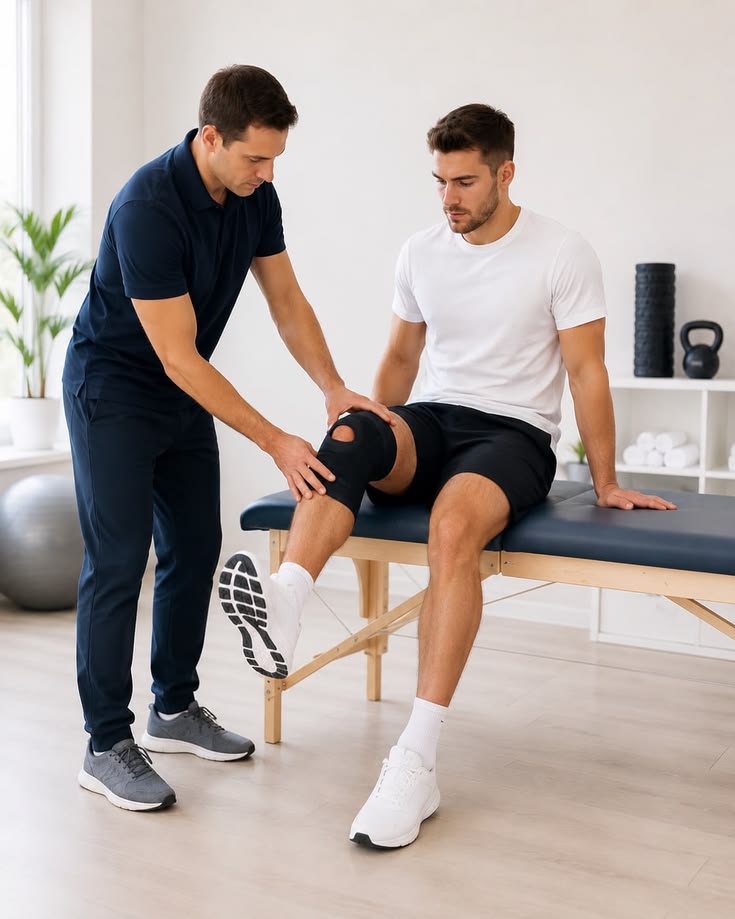


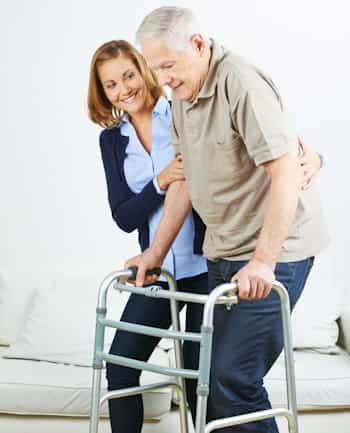
Is your elderly parent finding it difficult to get out of bed in the morning? Do they struggle to stand from their lounge chair, need assistance moving into a wheelchair or feel unsteady when transferring to the toilet?
These difficulties can develop gradually with age, illness or reduced physical activity. They may also occur following surgery, hospitalisation, stroke or another neurological condition.
When someone struggles with everyday transfers, both the person and their family can become concerned about safety, falling and maintaining independence.
If you live in South Lake, Western Australia, mobile physiotherapy allows you to receive professional assessment and rehabilitation in your own home, where these movement difficulties occur.
At RAS Mobile Physiotherapy Perth, our AHPRA-registered physiotherapists provide home visits for older adults, private clients and plan-managed or self-managed NDIS participants.
We assess walking, strength, balance, bed mobility and functional transfers, and develop individualised rehabilitation programs based on each person’s abilities.
Our focus is on supporting safer movement, helping people maintain or improve physical function and identifying when additional equipment or assistance is required.
Looking for mobile physio in South Lake? Call 0435 267 763 to enquire about a home appointment.
What Is Mobile Physiotherapy in South Lake?
Mobile physiotherapy in South Lake is a service where a qualified physiotherapist visits your home to assess and manage movement difficulties affecting strength, balance, walking, transfers and everyday physical function.
Instead of travelling to a clinic, physiotherapy takes place in your usual living environment.
A home visit may include:
- Bed mobility assessment
- Sit-to-stand assessment
- Walking and balance testing
- Muscle strength assessment
- Functional transfer training
- Neurological rehabilitation
- Post-hospital recovery
- Falls prevention
- Mobility aid review
- Pain and joint movement assessment
- Home exercise programs
- Family and carer education where appropriate
- Recommendations for further equipment assessment
Home physiotherapy is particularly relevant when the person’s main difficulty involves furniture, room layouts or equipment they use every day.
For example, someone may be able to stand from a firm chair at a clinic but struggle to get up from their soft lounge chair at home.
Another person may need assistance moving between their bed and wheelchair.
A physiotherapist can examine these challenges in context and recommend appropriate rehabilitation or further assessment.
Why Does Getting Out of Bed Become Difficult?
Getting out of bed involves several physical abilities working together.
The person needs enough movement control, strength and balance to change position, move towards the edge of the bed and transition safely to sitting or standing.
Difficulties can arise for many reasons.
Reduced muscle strength
Weakness in the trunk, arms or legs can make rolling, sitting up and standing harder.
Strength may decline following illness, reduced activity or certain medical conditions.
Joint pain or stiffness
Back pain, hip pain, knee arthritis and other musculoskeletal problems may affect movement in bed.
Some people find rolling or moving from lying to sitting particularly uncomfortable.
Neurological conditions
Stroke, Parkinson’s disease, multiple sclerosis and other neurological conditions may affect coordination, strength, muscle tone or movement control.
Reduced sitting balance
Someone may be able to sit when supported but struggle to maintain their balance at the edge of the bed.
This can make transfers unsafe without appropriate assistance.
Fatigue or reduced endurance
Following hospitalisation, even relatively short movements may require considerable effort.
Fear of falling
A person who has previously fallen during a transfer may hesitate to move or avoid attempting certain activities independently.
Bed and furniture characteristics
The height, firmness, position and accessibility of a bed can influence how someone moves.
However, changing the bed or using equipment is not always the correct solution without an individual assessment.
New, rapidly worsening or unexplained weakness should receive appropriate medical assessment. Sudden one-sided weakness, facial drooping or speech difficulties require emergency care.
8 Signs Someone May Need a Home Mobility Assessment
Families often notice functional changes before someone requests physiotherapy.
The following signs may suggest that an assessment would be useful.
1. They struggle to roll over in bed
Turning from one side to another may become difficult because of weakness, pain or reduced movement control.
2. Sitting up from lying requires assistance
The person may need someone to help them move from lying to sitting.
A physiotherapist can assess which factors are limiting the movement.
3. They cannot maintain sitting balance at the edge of the bed
Poor sitting balance may increase the risk of falling during dressing or transfers.
4. Standing from a chair requires several attempts
The person may push heavily through their arms, rock repeatedly or require physical assistance.
5. They feel unsteady immediately after standing
Weakness, poor balance, dizziness or blood pressure changes may be contributing.
Dizziness or faintness requires appropriate medical review.
6. Bed-to-chair transfers are becoming difficult
A person may struggle to move between their bed, lounge chair or wheelchair.
7. Family members are physically lifting them
If carers are using substantial physical effort to move someone, there may be a significant risk of injury to both the client and the caregiver.
An appropriate manual-handling and equipment assessment is needed.
8. They have fallen or nearly fallen during a transfer
Falls or repeated near falls during transfers require attention.
The person may need further medical review, rehabilitation, assistance or appropriate equipment.
Understanding Bed Mobility and Functional Transfers
Bed mobility and transfers are related but different skills.
What is bed mobility?
Bed mobility refers to movements performed while in bed or when changing position in relation to the bed.
Examples include:
- Rolling from one side to another
- Repositioning in bed
- Moving towards the edge of the bed
- Moving from lying to sitting
- Returning from sitting to lying
What is a functional transfer?
A functional transfer involves moving between positions or surfaces.
Examples include:
- Sitting to standing
- Standing to sitting
- Bed to chair
- Wheelchair to bed
- Chair to wheelchair
- Sitting to an appropriate toilet or commode
Some transfers involve standing and stepping.
Others may require different techniques, assistance or mechanical equipment.
Why are these movements important?
Transfer ability influences daily independence.
Difficulty moving out of bed may affect access to meals, toileting, personal care and participation in daily activities.
Transfers can also create safety concerns for carers if the person requires substantial assistance.
A physiotherapy assessment helps identify what the person can currently do, what assistance is appropriate and whether rehabilitation may improve or maintain their abilities.
How Does a Physiotherapist Assess Bed Mobility?
The assessment depends on the person’s condition, medical history and safety.
Step 1: Understanding the problem
The physiotherapist may ask:
- Which movements are difficult?
- When did the difficulty begin?
- Is the person experiencing pain?
- Have they recently been in hospital?
- Have they fallen during a transfer?
- What assistance do they currently receive?
- Are they using a hospital-style bed or other equipment?
Step 2: Assessing relevant physical abilities
Depending on clinical needs, the physiotherapist may examine:
- Trunk control
- Upper and lower limb strength
- Joint movement
- Sitting balance
- Coordination
- Functional endurance
- Neurological findings
- Pain during movement
Step 3: Observing functional movement
When safe and appropriate, the physiotherapist may assess how the person rolls, sits up, repositions or moves towards the bed edge.
Step 4: Reviewing the environment
The assessment may consider:
- Bed height
- Mattress characteristics
- Space around the bed
- Existing equipment
- Mobility aid access
- Floor surfaces
- Assistance available
Step 5: Developing recommendations
Depending on the findings, recommendations may include rehabilitation exercises, task-specific practice, safer movement strategies or referral for equipment and occupational therapy assessment.
Not every person will be able to perform bed mobility independently.
For some clients, the appropriate goal is maintaining comfort, preventing complications or for carers use suitable equipment and procedures.
Difficulty Standing From a Chair: How Physiotherapy May Help
Standing from a chair is one of the most common functional difficulties addressed during home physiotherapy.
The movement requires leg strength, balance and coordination.
Common reasons standing becomes difficult
- Reduced quadriceps strength
- Hip muscle weakness
- Knee or hip pain
- Poor balance
- Neurological conditions
- Reduced trunk control
- Fatigue
- Unsuitable chair height or design
Functional assessment
A physiotherapist may observe:
- Whether the person can stand without assistance
- Use of armrests
- Balance when rising
- Number of attempts required
- Pain during the movement
- Assistance or equipment needed
What might rehabilitation involve?
For suitable clients, treatment may include:
- Lower limb strengthening
- Supported sit-to-stand practice
- Balance exercises
- Functional movement training
- Education about safe movement
- Appropriate walking or endurance exercises
Is a higher chair always better?
Not necessarily.
Seat height, support, comfort and stability should be considered together.
Some clients may benefit from further assessment of seating equipment or furniture modifications by an occupational therapist.
What if the person cannot stand?
The physiotherapist should not force the person to stand.
Further assessment may identify a need for additional assistance, specialised transfer equipment or alternative transfer methods.
The aim is safe and appropriate movement, not standing at any cost.
Bed-to-Chair and Wheelchair Transfers at Home
Transfers between a bed and chair may be challenging for people with weakness, balance difficulties or neurological conditions.
What does the physiotherapist assess?
Depending on the person, assessment may include:
- Ability to sit upright
- Trunk and lower limb strength
- Standing balance
- Ability to follow instructions
- Coordination
- Weight-bearing capacity
- Pain and joint restrictions
- Wheelchair or chair suitability
- Amount of assistance required
Can transfer training improve independence?
For some people, appropriate strengthening and task-specific practice may improve transfer ability.
Other people may need ongoing assistance or transfer equipment.
What about wheelchair transfers?
Wheelchair transfers should consider the person’s movement abilities and the equipment used.
An assessment may identify the need for further wheelchair, seating or assistive technology input.
Should family members lift someone manually?
Family members should not attempt to lift a person manually when the transfer is beyond their assessed ability and safe handling arrangements.
Unsafe lifting can cause injury to the person being transferred and to the caregiver.
If transfers are becoming difficult or unsafe, arrange a professional assessment before continuing risky methods.
When Might a Hoist or Transfer Aid Be Needed?
Some clients require more support than can safely be provided through ordinary standing or stepping.
Equipment may be considered after an individual assessment.
Examples include:
- Transfer boards
- Slide sheets
- Standing transfer aids
- Powered standing hoists
- Full-body hoists
- Adjustable beds
- Specialised seating or positioning equipment
Does every person who needs help standing require a hoist?
No.
The correct equipment depends on the person’s physical abilities, weight-bearing capacity, coordination, cognition, medical condition and environment.
Standing aids versus full-body hoists
A standing aid or standing hoist may be suitable for selected people who can participate appropriately in the transfer and meet the equipment’s requirements.
A full-body hoist may be required when a person cannot safely complete a standing transfer.
These decisions should be based on professional assessment, the manufacturer’s instructions and an appropriate manual-handling plan.
Can carers learn to use transfer equipment?
Yes, but they need instruction and training specific to the person, equipment and care plan.
Untrained people should not improvise hoist use or transfer techniques.
When is occupational therapy needed?
Occupational therapists may assist with:
- Equipment selection
- Home modifications
- Bed and seating assessments
- Space and accessibility
- Assistive technology recommendations
- Functional daily living needs
A physiotherapist may work with the occupational therapist, nursing team and support providers when safe transfers require coordinated care.
Aged Care Physiotherapy in South Lake
Older adults may develop difficulties with bed mobility, chair transfers and walking because of reduced strength, arthritis, illness or neurological conditions.
These changes can affect personal care, confidence and independence.
RAS Mobile Physiotherapy Perth offers home-based physiotherapy for older adults with suitable rehabilitation needs.
Common aged care physiotherapy goals
- Maintain or improve bed mobility
- Improve functional strength
- Support sit-to-stand ability
- Improve walking and balance
- Reduce modifiable falls risk factors
- Support appropriate mobility aid use
- Assist rehabilitation after hospitalisation
- Manage arthritis-related movement limitations
- Support safer everyday transfers
- Maintain independence where possible
Example: An older adult needing help getting out of bed
Imagine an older resident living in South Lake who has recently become weaker following illness.
Previously, they could move from lying to sitting and stand from bed independently.
Now, they need assistance and become tired quickly.
A physiotherapist may assess their strength, sitting balance, bed mobility, transfers and activity tolerance.
Treatment could include appropriate strengthening and supervised functional movement practice.
If the assessment identifies a significant handling risk, additional equipment or occupational therapy review may be necessary.
The goal may be to improve independence, reduce assistance requirements or establish safer care arrangements.
This is an illustrative example, not a guaranteed outcome.
NDIS Physiotherapy in South Lake
RAS Mobile Physiotherapy Perth works with plan-managed and self-managed NDIS participants in South Lake and surrounding suburbs.
Home physiotherapy may be appropriate where disability affects mobility, transfers, physical strength or functional independence.
What can NDIS physiotherapy support?
Depending on the participant’s needs and applicable funding arrangements, physiotherapy may focus on:
- Bed mobility
- Functional transfers
- Standing balance
- Muscle strength
- Walking and gait training
- Neurological rehabilitation
- Postural control
- Physical endurance
- Mobility aid use
- Home exercise programs
- Functional maintenance goals
- Carer and support worker education
Example: Transfer difficulties for a wheelchair user
A participant who uses a wheelchair may wish to improve or maintain their ability to transfer between the bed and wheelchair.
The physiotherapist may assess physical strength, trunk control, movement coordination and safe transfer requirements.
Treatment might include suitable strengthening, functional movement practice and coordination with other healthcare professionals.
For some participants, the main goal may be safer assisted transfers rather than independent standing.
Can NDIS funding cover transfer rehabilitation?
It may, when the physiotherapy is an eligible disability-related support and meets applicable NDIS rules.
Treatment for unrelated acute injuries or ordinary medical rehabilitation is not automatically funded by the NDIS.
Plan-managed and self-managed participants
Plan-managed participants generally arrange invoicing through their plan manager.
Self-managed participants organise payment and claims according to their funding arrangements.
NDIA-managed supports generally require an NDIS-registered provider.
RAS works with plan-managed and self-managed participants only and does not claim to be an NDIS-registered provider.
Neurological Physiotherapy for Bed Mobility and Transfers
Neurological conditions can affect muscle strength, movement control, balance and coordination.
Some people may find sitting up in bed, transferring to a wheelchair or standing from a chair particularly challenging.
Home neurological physiotherapy may be appropriate for people living with:
- Stroke
- Parkinson’s disease
- Multiple sclerosis
- Acquired brain injury
- Spinal cord injury
- Cerebral palsy
- Other neurological conditions affecting movement
Stroke rehabilitation
Following stroke, weakness on one side of the body may affect rolling, sitting, standing and transfers.
Treatment may include suitable task-specific practice, strengthening, postural control and walking rehabilitation.
The affected arm must be protected from inappropriate pulling or handling.
Parkinson’s disease
Some people with Parkinson’s disease experience difficulty initiating movement or turning in bed.
Physiotherapy may involve appropriate movement strategies and functional training.
Multiple sclerosis
Fatigue, weakness and balance difficulties may influence transfers.
The rehabilitation program should consider symptom variability and activity tolerance.
Spinal cord injury
Transfer requirements depend on injury level, residual strength, sensation, equipment and care needs.
Some individuals may need specialist assistive technology and manual-handling assessment.
Individualised goals
Not everyone can or should attempt independent transfers.
For some clients, maintaining comfort, positioning and safer assisted movement may be the most appropriate rehabilitation priorities.
Post-Hospital and Post-Operative Rehabilitation
Some South Lake residents experience transfer difficulties after illness, surgery or hospitalisation.
A person who previously walked independently may return home with reduced strength, pain or a temporary need for a mobility aid.
Following hospitalisation
Physiotherapy may focus on:
- Rebuilding lower limb strength
- Improving bed mobility
- Practising safe transfers
- Walking rehabilitation
- Balance exercises
- Gradual endurance development
Following hip replacement
Home rehabilitation may include walking, strengthening and transfer practice while respecting the surgeon’s instructions.
Following knee replacement
Treatment may address knee movement, quadriceps strength, standing and walking ability.
Following a fracture
The physiotherapist should review the healing stage, weight-bearing restrictions and relevant medical advice before progressing movement.
When to seek medical review
New or severe pain, unexplained weakness, worsening symptoms or concerns after surgery require appropriate medical assessment.
Home physiotherapy should complement necessary medical and surgical follow-up.
Falls Prevention During Bed and Chair Transfers
Transfers can be a challenging part of daily life for someone with poor balance or reduced strength.
Common problems may include:
- Losing balance while standing
- Trying to move too quickly
- Pulling on unstable equipment
- Difficulty turning
- Fatigue
- Dizziness on standing
- Incorrect mobility aid use
- Unsuitable furniture
What can physiotherapy address?
A physiotherapist may assess:
- Leg strength
- Sitting and standing balance
- Transfer ability
- Walking pattern
- Mobility aid use
- Assistance requirements
- Relevant environmental concerns
What about dizziness when standing?
Some people feel light-headed after moving from lying or sitting to standing.
This may be associated with blood pressure changes, dehydration, medications or other medical conditions.
Such symptoms should receive appropriate medical review.
No.
Appropriate strengthening and balance rehabilitation may address certain physical risk factors, but they cannot remove every possibility of falling.
Safety may also depend on equipment, assistance, medical treatment and environmental arrangements.
Exercises That May Support Safer Transfers
Exercise programs should be individualised after assessment.
The following activities may be considered for suitable clients.
| Exercise or activity | Possible rehabilitation goal |
|---|---|
| Supported sit-to-stand | Improve functional leg strength and transfers |
| Seated knee extensions | Strengthen the quadriceps |
| Seated marching | Improve hip movement and muscle activation |
| Appropriate trunk-control exercises | Support sitting balance and posture |
| Supported heel raises | Improve calf strength |
| Gentle range-of-motion exercises | Maintain appropriate joint movement |
| Supported weight shifting | Develop standing control |
| Supervised functional transfer practice | Improve relevant everyday movements |
| Appropriate walking exercises | Improve gait and endurance |
Can someone exercise if they cannot stand?
Some seated or lying exercises may be appropriate, depending on the person’s diagnosis and medical condition.
However, the program should be selected by a clinician who understands their limitations.
Should family members help with exercises?
Family members may assist where appropriate, after receiving clear instructions and with the person’s consent.
They should not attempt movements that require unsupported lifting or place either person at risk.
Why is progression important?
As strength and functional ability change, exercises may need adjustment.
For other clients, particularly those with progressive neurological conditions, maintaining current function may be the main goal.
How Families and Support Workers Can Help
Family members and support workers often provide important day-to-day assistance for people with reduced mobility.
However, transfer tasks can be physically demanding and require appropriate training.
Follow the individual care plan
A person’s approved mobility and manual-handling plan should guide assistance.
Do not substitute a different transfer technique simply because it appears easier.
Understand the person’s abilities
The amount of assistance needed may change after illness, injury or a decline in function.
A new assessment may be required.
Use appropriate equipment
Equipment must be suitable for the person and used according to the relevant instructions.
Avoid unsafe manual lifting
Trying to physically lift someone beyond safe handling arrangements can injure both the client and caregiver.
Communicate changes
Report significant changes such as:
- New difficulty standing
- Repeated near falls
- Increased pain
- Dizziness during transfers
- Reduced ability to follow instructions
- Difficulty using prescribed equipment
Encourage participation where appropriate
If the person has been assessed as safe to participate in certain movements, following the prescribed rehabilitation plan may support physical function.
The priority remains safe, individualised care.
What Happens During Your First Mobile Physio Appointment?
Your first appointment allows the physiotherapist to assess your movement difficulties and discuss appropriate treatment goals.
Step 1: Medical and functional history
The physiotherapist may ask about:
- Current diagnosis and medical conditions
- Recent hospitalisation
- Previous falls
- Pain
- Strength and balance concerns
- Bed and chair transfers
- Mobility aids
- Existing transfer equipment
- Current level of assistance
- Rehabilitation goals
Step 2: Physical assessment
Depending on the person’s condition, the physiotherapist may assess:
- Muscle strength
- Joint movement
- Sitting and standing balance
- Bed mobility
- Sit-to-stand ability
- Functional transfers
- Walking
- Relevant neurological findings
Step 3: Home environment and equipment review
The physiotherapist may review relevant furniture, transfer spaces and mobility aids.
Step 4: Treatment and education
Where safe and appropriate, initial treatment may include exercises, functional movement practice or mobility education.
Step 5: Rehabilitation recommendations
The physiotherapist will discuss findings, recommended follow-up appointments and whether additional assessment or equipment is required.
For people with complex handling needs, coordination with occupational therapy, nursing and support services may be recommended.
How Is Rehabilitation Progress Measured?
Progress should be assessed according to meaningful functional goals.
Possible measures include:
- Ability to roll or reposition in bed
- Sitting balance
- Sit-to-stand performance
- Muscle strength
- Transfer ability
- Walking distance
- Balance
- Level of assistance required
- Functional endurance
- Individual rehabilitation goals
Examples of goals
| Current difficulty | Possible physiotherapy goal |
|---|---|
| Difficulty rolling in bed | Improve or maintain bed mobility |
| Reduced sitting balance | Improve sitting control with appropriate support |
| Difficulty standing | Improve functional strength and sit-to-stand ability |
| Unsafe assisted transfer | Establish safer transfer arrangements |
| Reduced walking ability | Improve walking with appropriate assistance |
| Increased caregiver handling demands | Review equipment and safe assistance needs |
| Neurological mobility limitations | Improve or maintain meaningful functional movement |
| Weakness after hospitalisation | Rebuild appropriate strength and activity tolerance |
A physiotherapy plan should be reviewed according to clinical findings, changes in physical ability and individual progress.
Funding and Payment Options for Mobile Physio South Lake
RAS Mobile Physiotherapy Perth provides home physiotherapy through several funding pathways.
Private physiotherapy
Private clients can generally arrange physiotherapy without needing a GP referral.
Aged care physiotherapy
Eligible older Australians may access physiotherapy through approved aged care arrangements, including Support at Home.
The Australian Government introduced Support at Home in November 2025.
Access depends on assessment, approved services, funding and provider arrangements.
Restorative Care Pathway
Eligible older adults experiencing functional decline after illness or injury may receive coordinated, short-term rehabilitation through the Restorative Care Pathway.
Approval and provider arrangements are required.
Commonwealth Home Support Program
Some eligible older adults may receive allied health services through applicable Commonwealth Home Support Program arrangements, subject to assessment and service availability.
NDIS physiotherapy
RAS works with plan-managed and self-managed participants when physiotherapy is an eligible disability-related support.
Private health insurance
Some private health insurance policies include physiotherapy benefits.
Clients should confirm claiming requirements and provider eligibility directly with their insurer.
How much does mobile physiotherapy cost?
Fees depend on the appointment type, funding arrangement and any applicable travel charges.
Contact RAS Mobile Physiotherapy Perth to confirm pricing before booking.
Mobile Physio South Lake and Nearby Suburbs
RAS Mobile Physiotherapy Perth provides home physiotherapy in South Lake and surrounding Perth suburbs, subject to service coverage and clinician availability.
Nearby suburbs include:
- Bibra Lake
- North Lake
- Jandakot
- Yangebup
- Cockburn Central
- Success
- Beeliar
- Coolbellup
- Leeming
- Murdoch
- Kardinya
- Spearwood
- Hamilton Hill
- Winthrop
- Bateman
- Bull Creek
- Atwell
- Treeby
- Canning Vale
South Lake is located within the City of Cockburn.
Local landmarks include Anning Park, Jandakot Hall and the South Lake Ottey Family & Neighbourhood Centre.
For clients with reduced mobility, returning to an appropriate community activity may become a long-term rehabilitation goal.
For others, the immediate priority may simply be moving safely between the bed, bathroom and lounge chair.
Outdoor activities should only be considered where suitable for the person’s strength, balance, equipment and medical condition.
Residents around South Lake Drive and surrounding South Lake streets can contact the team to enquire about home visit availability.
Why Choose RAS Mobile Physiotherapy Perth?
RAS Mobile Physiotherapy Perth provides:
- AHPRA-registered physiotherapists
- Home-based functional mobility assessment
- Bed mobility rehabilitation
- Chair and functional transfer training
- Strength and balance exercises
- Walking rehabilitation
- Falls prevention
- Mobility aid education
- Aged care physiotherapy
- Plan-managed and self-managed NDIS physiotherapy
- Neurological rehabilitation
- Post-hospital recovery
- Post-operative rehabilitation
- Individualised home exercise programs
- Family and carer education where appropriate
Our focus is on the movements that matter in everyday life.
For one person, this may mean being able to roll more comfortably in bed.
For another, it may involve standing from a chair with less assistance, improving wheelchair transfers or maintaining mobility with appropriate equipment and support.
Frequently Asked Questions About Mobile Physio South Lake
1. Do you provide mobile physiotherapy in South Lake?
Yes. RAS Mobile Physiotherapy Perth provides home visit physiotherapy in South Lake, WA 6164, subject to clinician and appointment availability.
2. Can a physiotherapist help someone who cannot get out of bed easily?
Yes. A physiotherapist can assess bed mobility, strength, balance and functional limitations, then recommend appropriate rehabilitation or further equipment assessment.
3. Can physiotherapy help with rolling and sitting up in bed?
Physiotherapy may help improve bed mobility through suitable strengthening, movement practice and individualised rehabilitation.
4. Can home physiotherapy help someone stand from a chair?
Yes. A physiotherapist may assess standing ability and prescribe appropriate strengthening, balance and functional transfer exercises.
5. Can a physiotherapist assess bed-to-wheelchair transfers?
Yes. A physiotherapist can assess functional transfer ability and safety and recommend appropriate training, assistance or further equipment assessment.
6. When might someone need a standing hoist or full-body hoist?
Transfer equipment may be needed when ordinary standing or assisted transfers cannot be completed safely. Equipment choice requires an individual assessment and trained use.
7. Is it safe for family members to lift an elderly parent?
Unassessed manual lifting can injure both people. Families should seek professional handling advice and use appropriate care plans, assistance and equipment.
8. Do you provide aged care physiotherapy in South Lake?
Yes. RAS provides home physiotherapy for older adults with suitable needs involving weakness, transfers, balance, walking and reduced independence.
9. Can Support at Home funding cover bed mobility physiotherapy?
Physiotherapy may be available through approved Support at Home arrangements when it meets the older person’s assessed needs and appropriate provider arrangements.
10. What is the Restorative Care Pathway?
It is a short-term aged care pathway for eligible older Australians who require coordinated rehabilitation to improve or maintain function after illness or injury.
11. Do you provide NDIS physiotherapy in South Lake?
Yes. RAS works with plan-managed and self-managed NDIS participants for appropriate disability-related physiotherapy supports.
12. Can NDIS physiotherapy help a wheelchair user with transfers?
Yes, when eligible. Physiotherapy may address strength, postural control, transfers and functional goals that relate to the participant’s disability.
13. Can home physiotherapy help with transfers after a stroke?
Yes. Appropriate neurological physiotherapy may address bed mobility, sitting balance, standing, transfers and walking according to the person’s abilities.
14. Can physiotherapy help after hospital discharge or joint replacement?
Yes, when clinically appropriate. Treatment may address strength, mobility and transfers while following relevant medical or surgical instructions.
15. Do I need a GP referral for private home physiotherapy?
A GP referral is generally not required for privately funded physiotherapy. Some other funding arrangements may have additional requirements.
16. How do I book mobile physio in South Lake?
Call RAS Mobile Physiotherapy Perth on 0435 267 763 or enquire through the website to discuss your needs, funding arrangements and appointment availability.
Book Mobile Physio in South Lake
If you or a loved one is struggling to get out of bed, stand from a chair, transfer to a wheelchair or move safely around the home, physiotherapy may provide an opportunity for professional assessment and rehabilitation.
RAS Mobile Physiotherapy Perth supports private clients, older adults and plan-managed or self-managed NDIS participants through individualised home physiotherapy.
Our focus is on safer functional movement, appropriate strengthening and maintaining or improving independence wherever possible.
Call 0435 267 763 to enquire about mobile physio in South Lake.
Website: https://rasmobilephysioperth.com.au/
Email: info@rasmobilephysioperth.com.au
Important: Do not attempt unsafe lifting or transfer techniques. Sudden weakness, new stroke-like symptoms, serious injury or other medical emergencies require urgent assessment. Call 000 in Australia for an emergency.