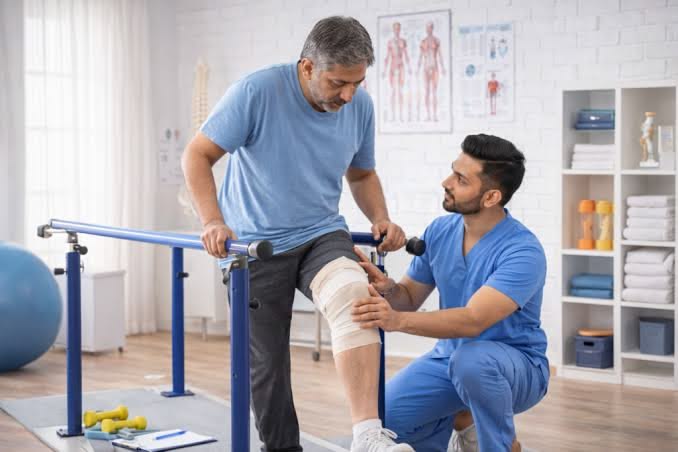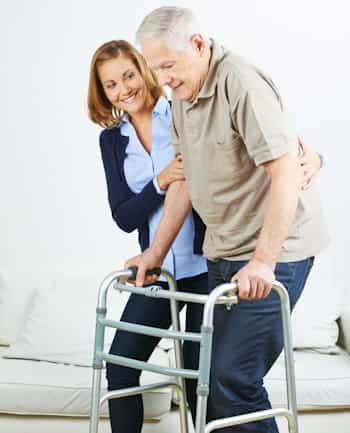


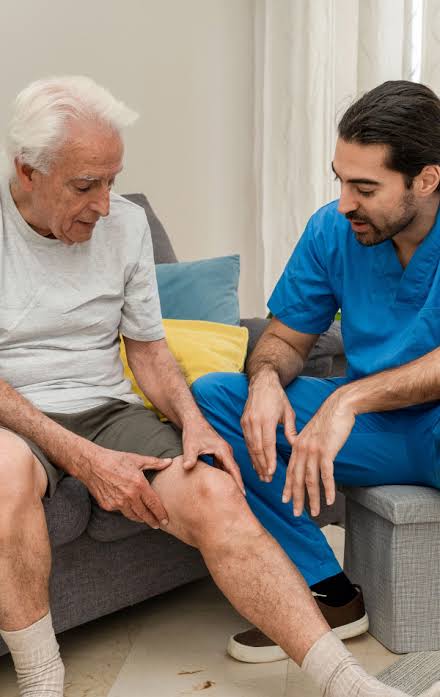
Recovering from knee replacement surgery can make everyday activities more challenging than expected. Walking around the house, getting out of bed, standing from a chair and managing entrance steps may all require extra effort during the early stages of recovery.
You may also notice swelling, stiffness, muscle weakness or difficulty bending and straightening your knee.
While these difficulties can be part of the recovery process, knowing which exercises to perform and how to progress safely is important.
If you live in Beeliar, Western Australia, mobile physiotherapy allows you to receive professional knee rehabilitation in your own home, without needing to travel to a clinic while your mobility is limited.
At RAS Mobile Physiotherapy Perth, our AHPRA-registered physiotherapists provide home visits for people recovering from knee and hip surgery, older adults, private clients, and plan-managed or self-managed NDIS participants with eligible disability-related needs.
We focus on practical rehabilitation goals such as improving knee movement, rebuilding leg strength, walking safely, managing functional transfers and gradually returning to everyday activities.
Whether you have recently undergone a total knee replacement, are preparing for surgery or need ongoing rehabilitation, treatment should be tailored to your condition and the instructions of your surgical team.
Looking for mobile physio in Beeliar? Call 0435 267 763 to discuss a home physiotherapy appointment.
What Is Mobile Physio in Beeliar?
Mobile physiotherapy in Beeliar is a service where a qualified physiotherapist visits your home to assess and treat movement problems, weakness, pain, balance difficulties and rehabilitation needs.
Instead of travelling to a physiotherapy clinic, the assessment and treatment take place in your usual living environment.
For someone recovering after knee surgery, a home appointment may include:
- Reviewing the hospital discharge instructions
- Assessing knee movement
- Evaluating muscle strength
- Walking and gait assessment
- Reviewing walking frame or crutch use
- Functional transfer training
- Appropriate stair or step assessment
- Balance rehabilitation
- Home exercise instruction
- Advice about activity progression
- Monitoring functional rehabilitation goals
- Identifying concerns that require medical review
Home physiotherapy is particularly useful when the person’s main challenges involve everyday activities.
For example, a patient may be walking with a frame after surgery but find it difficult to stand from their lounge chair.
Another person may struggle with the entrance step at their front door.
These situations can be assessed directly during a home visit.
Why Is Physiotherapy Important After Knee Replacement?
Knee replacement surgery is performed to address significant knee joint problems, commonly severe osteoarthritis that has not responded adequately to non-surgical management.
During a total knee replacement, damaged joint surfaces are replaced with artificial components.
Although surgery may help reduce pain and improve function over time, physical rehabilitation remains an important part of recovery.
Common problems after knee replacement
Following surgery, patients may experience:
- Knee pain
- Swelling
- Reduced knee bending
- Difficulty fully straightening the knee
- Quadriceps weakness
- Difficulty walking
- Reduced balance
- Trouble standing from chairs
- Difficulty managing stairs
- Reduced walking endurance
The severity and duration of these problems vary.
What does physiotherapy aim to achieve?
Physiotherapy may help patients:
- Improve or maintain appropriate knee range of motion.
- Rebuild lower limb strength.
- Improve walking ability.
- Use mobility aids appropriately.
- Practise safe transfers.
- Restore functional balance.
- Progress towards suitable everyday activities.
- Work towards individual recovery goals.
Does everyone recover at the same rate?
No.
Recovery depends on several factors, including the type of operation, previous mobility, general health, pain, complications and rehabilitation progress.
Someone who was active before surgery may have different rehabilitation needs from someone with significant weakness or other health conditions.
The physiotherapy plan should follow the treating surgeon’s instructions and be adjusted to individual progress.
What Should You Expect After Knee Replacement Surgery?
The first stages of recovery often involve managing pain and swelling, regaining movement and learning how to move safely.
Physiotherapy frequently begins in hospital soon after surgery when medically appropriate.
Before discharge, the hospital team may assess whether you can manage essential movements and whether additional assistance or equipment is needed.
Early recovery
Depending on the procedure and medical advice, early rehabilitation may focus on:
- Getting in and out of bed
- Standing safely
- Using a prescribed walking aid
- Walking short distances
- Performing prescribed knee exercises
- Managing essential transfers
- Understanding weight-bearing instructions
Continuing rehabilitation at home
Once discharged, many patients need to continue exercises and gradually rebuild mobility.
Common goals include improving knee movement, reducing functional limitations and increasing strength.
Progressing everyday activities
As recovery develops, treatment may address:
- Walking more comfortably
- Standing from chairs
- Moving around the kitchen
- Managing appropriate steps
- Improving balance
- Increasing activity tolerance
- Returning to suitable household and community activities
How long does knee replacement recovery take?
Recovery is not completed in a fixed number of weeks.
Some improvements occur relatively early, while strength, comfort and functional ability may continue changing over several months.
Your surgeon and physiotherapist can provide guidance based on your procedure and circumstances.
Do not compare your recovery solely with another patient’s experience.
8 Signs You May Need Additional Physiotherapy After Knee Surgery
Some difficulties are expected during recovery, but others may indicate that additional assessment or rehabilitation is useful.
1. You are struggling to bend your knee
Reduced knee bending can make sitting, walking and using stairs difficult.
A physiotherapist can assess movement and advise on appropriate exercises.
2. You cannot comfortably straighten your knee
Knee extension is important for standing and walking.
Reduced extension may affect gait and functional movement.
3. Your thigh muscles feel weak
Quadriceps weakness is common following knee replacement and may make standing, walking and stairs more difficult.
4. You are uncertain how to use your walking frame
Incorrect walking aid technique may affect stability or movement efficiency.
A physiotherapist can assess your walking pattern and equipment use.
5. Standing from chairs remains difficult
Pain, weakness, stiffness or balance limitations may contribute to difficulty standing.
6. You feel unsteady when turning
Reduced strength or balance may affect walking, particularly when changing direction.
7. You are unsure how to manage entrance steps
Steps require appropriate strength, coordination and technique.
An individual assessment can help determine whether step practice is safe.
8. You are not confident progressing your exercises
Some patients are uncertain whether to increase walking, repeat exercises more frequently or change activity levels.
A physiotherapist can review the hospital program and help develop an appropriate progression.
Important: Severe or rapidly increasing symptoms, suspected infection or signs of a blood clot require medical assessment rather than routine exercise progression.
Preparing Your Home for Knee Replacement Recovery
Preparing the home can make recovery more manageable.
A physiotherapist or occupational therapist may help identify relevant needs.
Clear walking routes
Ensure that areas used for essential movement are free from unnecessary clutter.
Loose rugs and electrical cords may create hazards.
Consider chair height
Standing from low or soft seating may be difficult after surgery.
Suitable seating should provide stable support and be appropriate for the person’s height and mobility.
Review bedroom access
The bed should be accessible with the prescribed walking aid.
If the person has difficulty getting in or out of bed, professional assessment may be appropriate.
Plan bathroom access
Toilet and shower transfers may require additional consideration.
An occupational therapist can assess whether specialised equipment or modifications are needed.
Discuss stairs before discharge
If your home has stairs or entrance steps, tell your hospital physiotherapist before discharge.
They can assess and provide guidance appropriate to your recovery.
Arrange practical support
Some patients need temporary help with shopping, meals, household tasks or transport.
Planning ahead may reduce unnecessary physical demands during early recovery.
Keep important instructions available
Have your discharge summary, exercise program, medication information and surgical instructions available for follow-up appointments.
Improving Knee Movement and Managing Stiffness
Knee bending and straightening are important components of recovery after knee replacement.
Stiffness and swelling may affect movement, especially in the early postoperative period.
Why knee extension matters
Straightening the knee contributes to standing, walking and efficient movement.
Reduced extension may cause compensatory walking patterns.
Why knee flexion matters
Bending the knee is important for sitting, transfers, stairs and other everyday activities.
How does physiotherapy help?
Depending on the assessment and surgical instructions, physiotherapy may include:
- Appropriate knee mobility exercises
- Quadriceps activation
- Supported functional movement
- Walking practice
- Education about the prescribed exercise program
- Review of progress
Should you force the knee to bend?
No.
Exercises should be performed according to the treating team’s instructions.
Forceful or aggressive movement that causes excessive pain may be inappropriate.
What about swelling?
Some swelling is common following knee replacement.
However, swelling should be monitored alongside pain, wound appearance and other symptoms.
Your treating team may recommend specific strategies, such as suitable positioning, cold therapy or other postoperative care.
A physiotherapist should reinforce those instructions rather than replace them.
Rebuilding Quadriceps and Lower Limb Strength
The quadriceps are the muscles at the front of the thigh.
They help straighten the knee and contribute to standing, walking and controlling movement on steps.
Following knee replacement, these muscles may be weak.
Why does weakness develop?
Surgery, pain, swelling and reduced activity can affect muscle activation and strength.
How might physiotherapy help?
Appropriate rehabilitation may include:
- Quadriceps activation exercises
- Seated knee strengthening
- Supported sit-to-stand practice
- Hip strengthening
- Functional walking exercises
- Progressive resistance exercises when suitable
Why strengthen the hips as well?
Hip muscles contribute to balance and lower limb movement during walking and stepping.
Is walking alone enough?
Walking is useful for functional recovery, but targeted strengthening may also be needed.
How quickly should strengthening progress?
The physiotherapist should consider:
- The surgical protocol
- Knee pain and swelling
- Current muscle strength
- Walking ability
- Balance
- Medical conditions
- Functional goals
The aim is appropriate progression rather than completing exercises at the highest possible intensity.
Walking Safely After Knee Replacement
Walking rehabilitation is an important part of recovery for many knee replacement patients.
A person may initially use crutches, a walking frame or another recommended mobility aid.
What can a physiotherapist assess?
A walking assessment may include:
- Step length
- Knee movement during walking
- Weight-bearing pattern
- Balance
- Walking speed
- Use of prescribed aids
- Turning ability
- Walking endurance
Why practise walking at home?
A person may manage an open hospital corridor but struggle with furniture, narrow spaces or entrance steps at home.
A home visit allows these practical difficulties to be assessed.
When can you stop using a walking frame?
There is no single answer for everyone.
The decision should reflect your balance, walking quality, pain, strength, weight-bearing instructions and medical guidance.
Stopping a walking aid too early may increase the risk of falling.
Should you walk longer every day?
Not automatically.
Walking should progress according to the prescribed rehabilitation plan and your response to activity.
Excessive activity may aggravate pain or swelling.
What if you are limping?
A persistent limp may reflect pain, weakness, reduced knee movement or other issues.
A physiotherapist can assess the walking pattern and determine whether rehabilitation or further review is appropriate.
Stair Training After Knee Replacement Surgery
Stairs are one of the most common concerns after knee surgery.
For Beeliar residents living in homes with entrance steps or stairs, this may be a priority during rehabilitation.
Why are stairs difficult?
Managing stairs requires:
- Lower limb strength
- Knee movement
- Balance
- Coordination
- Weight-bearing ability
- Appropriate use of support
When can you practise stairs?
Stair training should be introduced according to your surgeon’s instructions, postoperative restrictions and assessment findings.
Your hospital physiotherapist should provide specific instructions before discharge if stair access is necessary.
Can a mobile physiotherapist practise stairs at home?
Where clinically appropriate, a physiotherapist may assess and supervise step or stair practice in the home.
The suitability depends on the person’s condition and the available environment.
What if there are no handrails?
The lack of suitable support may create additional safety concerns.
The physiotherapist may recommend alternative arrangements or occupational therapy input.
Should you practise stairs independently?
Not until it has been established that you can manage the activity safely.
Do not attempt challenging stairs or entrance steps without appropriate instruction and assistance when needed.
Getting Out of Bed, Standing From Chairs and Car Transfers
Recovering after knee surgery involves more than walking.
Everyday transfers may remain uncomfortable while the knee is painful or stiff.
Bed mobility
A physiotherapist may assess how you move between lying and sitting and how you position yourself when getting in or out of bed.
Sit-to-stand transfers
Standing from a chair requires lower limb strength and knee movement.
Treatment may include suitable strengthening and functional transfer practice.
Toilet transfers
The height and accessibility of the toilet can influence transfer difficulty.
Additional equipment assessment may be appropriate for some patients.
Car transfers
Getting in and out of a car may be uncomfortable when knee bending is limited.
A physiotherapist may provide individual movement education.
Driving should only resume when you meet your surgeon’s advice, medication restrictions, licensing obligations and insurance requirements.
Why practise transfers in the home?
Your usual bed, lounge chair and bathroom may differ from the equipment used in hospital.
Home assessment can help identify difficulties that become apparent after discharge.
Managing Pain, Swelling and Daily Activity
Pain and swelling can affect movement after knee replacement.
These symptoms should be monitored carefully and managed according to the surgical team’s recommendations.
Is pain normal after surgery?
Some postoperative pain is expected.
However, severe, unusual or worsening pain should be assessed appropriately.
Is swelling normal?
Swelling can occur after joint replacement and may fluctuate with activity.
Your treating team should advise on appropriate management and warning signs.
How should activity be progressed?
A rehabilitation plan may balance:
- Prescribed exercises
- Walking and functional activity
- Rest
- Symptom monitoring
- Follow-up appointments
Can you use ice after surgery?
Cold therapy may be recommended for some patients.
Follow the instructions from your treating team, including appropriate skin protection, timing and precautions.
What about pain medication?
Take medication only as prescribed or advised by your medical team.
Physiotherapists can discuss how symptoms affect rehabilitation, but medication changes should be managed by an appropriate prescriber.
Exercises That May Be Included After Knee Replacement
Exercise selection depends on the surgical protocol and individual assessment.
The following are examples of activities commonly used during rehabilitation.
| Exercise or activity | Potential rehabilitation purpose |
|---|---|
| Prescribed knee bending exercises | Improve available knee flexion |
| Prescribed knee extension exercises | Improve knee straightening |
| Quadriceps activation | Improve thigh muscle activation |
| Seated knee extensions | Improve quadriceps strength when appropriate |
| Ankle movements | Support lower limb movement as prescribed |
| Supported sit-to-stand | Functional strength and transfers |
| Appropriate hip strengthening | Improve lower limb capacity |
| Supported balance activities | Improve standing control |
| Walking with prescribed aid | Gait and functional mobility |
| Supervised step practice | Functional stair-related ability when safe |
How many repetitions should you complete?
Follow the individual exercise plan provided by your surgical and physiotherapy team.
Do not assume another patient’s repetitions or exercise intensity are appropriate for you.
Should exercises cause pain?
Some discomfort may occur during postoperative rehabilitation.
However, severe pain or marked symptom aggravation should prompt modification or professional review.
Can exercise be progressed at every appointment?
Not necessarily.
Progression depends on recovery, symptoms, strength and functional performance.
Can you exercise without equipment?
Many early home exercises use simple movements or household surfaces.
However, the exercises must still be appropriate for your operation and current abilities.
Common Mistakes During Knee Replacement Recovery
Understanding common rehabilitation problems can help patients make safer decisions.
1. Stopping exercises too early
Some patients reduce exercise as soon as walking becomes easier.
However, strength and movement rehabilitation may continue beyond the initial period.
2. Overdoing activity
Walking excessively or attempting difficult exercises before being ready may aggravate symptoms.
3. Ignoring knee extension
Some people concentrate only on bending the knee.
Both bending and straightening are relevant to functional recovery.
4. Stopping the walking aid prematurely
A walker or crutches should not be discontinued solely because the patient feels impatient to walk without them.
5. Avoiding all movement because of discomfort
Prolonged inactivity may contribute to weakness and stiffness.
Movement should follow the prescribed rehabilitation plan.
6. Comparing recovery with others
Different medical conditions, procedures and starting abilities influence rehabilitation.
7. Ignoring warning signs
Increasing redness, wound concerns, unusual leg swelling or systemic symptoms should not be dismissed as ordinary recovery.
8. Attempting stairs or difficult transfers without assessment
Functional activities should be introduced according to safety and postoperative instructions.
When Should You Seek Medical Help After Knee Replacement?
Complications after knee replacement are not common, but recognising warning signs is important.
Contact your surgeon or seek urgent medical assessment for:
- Increasing redness, warmth or concerning changes around the wound
- Wound discharge or a fever
- Unexpectedly worsening pain
- New or significant calf pain, tenderness or swelling
- Significant changes in leg colour or circulation
- New inability to bear weight or move as previously instructed
These symptoms may require assessment for infection, blood clot or another complication.
Call 000 immediately for:
- Sudden chest pain
- Severe or sudden breathlessness
- Coughing blood with breathing difficulties
- Collapse or loss of consciousness
- New stroke-like symptoms
- Other signs of a medical emergency
Do not continue physiotherapy exercises while waiting for a routine appointment if you suspect a serious postoperative complication.
Aged Care Physiotherapy in Beeliar
Older adults may require additional support recovering from knee replacement, particularly when they have other health conditions or reduced mobility.
RAS Mobile Physiotherapy Perth offers home-based physiotherapy for older adults with appropriate rehabilitation needs.
Common aged care rehabilitation goals
- Improve lower limb strength
- Support recovery after knee or hip replacement
- Improve walking ability
- Manage functional transfers
- Address balance difficulties
- Reduce modifiable falls risk factors
- Improve mobility aid use
- Maintain independence at home
Example: An older adult recovering after knee replacement
Imagine a Beeliar resident returning home after total knee replacement.
They can walk short distances with a frame but struggle to stand from the lounge chair and manage the entrance step.
A physiotherapist may review their discharge instructions, assess knee movement, strength and walking, and identify relevant functional limitations.
Treatment could involve appropriate strengthening, mobility exercises, walking training and supervised transfer practice.
As recovery progresses, the rehabilitation plan may be adjusted.
This is an illustrative example rather than a promise of a particular outcome.
Can Support at Home fund physiotherapy?
Eligible older Australians may access approved physiotherapy through the Support at Home program.
Access depends on aged care assessment, individual approval, funding and provider arrangements.
What is the Restorative Care Pathway?
The Restorative Care Pathway is a short-term, coordinated aged care pathway that may help eligible older people regain function following illness or injury.
It can involve physiotherapy alongside other allied health or nursing services.
However, eligibility requires assessment, and the pathway should not be assumed to cover every routine postoperative physiotherapy appointment.
For more information, visit My Aged Care.
NDIS Physiotherapy in Beeliar
RAS Mobile Physiotherapy Perth works with plan-managed and self-managed NDIS participants in Beeliar and surrounding suburbs.
NDIS physiotherapy may help address eligible disability-related physical limitations affecting movement, balance and everyday participation.
What can NDIS physiotherapy support?
Depending on the participant’s needs and funding arrangements, physiotherapy may address:
- Disability-related walking difficulties
- Functional balance
- Muscle weakness
- Neurological rehabilitation
- Physical endurance
- Functional transfers
- Postural control
- Mobility aid education
- Individualised exercise programs
- Appropriate functional maintenance goals
- Carer and support worker education
Does NDIS funding cover knee replacement rehabilitation?
Not automatically.
Physiotherapy required for ordinary surgical recovery is generally a mainstream healthcare responsibility.
The NDIS may fund physiotherapy where it addresses an eligible participant’s ongoing disability-related support needs and meets the applicable funding criteria.
A person having an NDIS plan does not mean every postoperative appointment is covered.
What if a participant has a neurological disability and also undergoes knee surgery?
The treating team should distinguish between ordinary postoperative rehabilitation and therapy addressing ongoing disability-related functional limitations.
The participant’s plan and funding criteria should be reviewed before claiming a service.
Plan-managed and self-managed participants
Plan-managed participants generally arrange invoices through their plan manager.
Self-managed participants organise payment and claiming under their own arrangements.
NDIA-managed supports generally require an NDIS-registered provider.
RAS works with plan-managed and self-managed NDIS participants only and does not claim NDIS provider registration.
Other Home Physiotherapy Services in Beeliar
Although this article focuses on knee replacement rehabilitation, RAS Mobile Physiotherapy Perth also provides other home-based services.
Hip replacement rehabilitation
Physiotherapy may support walking, strengthening and functional transfers following hip surgery, according to the surgeon’s instructions.
Falls prevention
Strength and balance rehabilitation may address modifiable falls risk factors.
Stroke rehabilitation
Home neurological physiotherapy may focus on walking, transfers, balance, strength and functional movement.
Parkinson’s disease
Physiotherapy may support appropriate gait strategies, movement control, balance and functional activities.
Arthritis physiotherapy
Suitable exercise and movement education may help people living with knee or hip osteoarthritis.
Post-hospital rehabilitation
Some people experience weakness, reduced endurance or balance difficulties following illness or hospitalisation.
Home physiotherapy may help when medically appropriate.
What Happens During Your First Home Physiotherapy Appointment?
Your initial assessment helps the physiotherapist understand your surgery, symptoms and functional goals.
Step 1: Review your surgery and discharge plan
The physiotherapist may ask about:
- Type and date of surgery
- Hospital discharge instructions
- Weight-bearing requirements
- Postoperative precautions
- Current pain and swelling
- Walking aid use
- Medications where relevant
- Medical history
- Rehabilitation goals
Step 2: Knee and lower limb assessment
Depending on your condition, assessment may include:
- Knee range of motion
- Quadriceps activation and strength
- Hip and lower limb strength
- Functional balance
- Walking pattern
- Sit-to-stand ability
- Functional transfers
Step 3: Home mobility assessment
The physiotherapist may observe how you move around your living environment.
This can include standing from a chair, getting out of bed or navigating appropriate indoor spaces.
Step 4: Initial treatment
Where safe and appropriate, treatment may involve prescribed mobility exercises, strengthening, walking practice or functional movement education.
Step 5: Rehabilitation planning
The physiotherapist will discuss assessment findings, suitable goals and whether follow-up appointments are indicated.
Your rehabilitation program should be coordinated with the instructions and recommendations of your surgical team.
How Is Progress Measured After Knee Replacement?
Progress should be assessed through a combination of clinical findings and practical everyday activities.
Possible outcome measures include:
- Knee flexion
- Knee extension
- Quadriceps strength
- Walking quality
- Walking distance
- Sit-to-stand ability
- Balance
- Stair or step performance
- Need for mobility aids
- Pain and symptom response
- Individual functional goals
Examples of rehabilitation goals
| Current difficulty | Example goal |
|---|---|
| Limited knee bending | Improve knee movement according to clinical needs |
| Difficulty straightening the knee | Improve available extension and functional movement |
| Weak quadriceps | Improve lower limb strength |
| Difficulty standing from chairs | Improve sit-to-stand performance |
| Walking with a frame | Improve safe walking and appropriate aid use |
| Difficulty managing entrance steps | Progress towards safe step negotiation when appropriate |
| Reduced walking endurance | Increase suitable walking tolerance |
| Difficulty returning to routine activities | Improve function for meaningful daily tasks |
What if recovery is slower than expected?
Recovery varies, but persistent problems should be reviewed rather than ignored.
Your physiotherapist may adjust the program or recommend further surgical or medical review where needed.
Funding and Payment Options for Mobile Physio Beeliar
RAS Mobile Physiotherapy Perth supports several funding pathways.
Private physiotherapy
Private clients can generally book home physiotherapy without a GP referral.
Aged care physiotherapy
Eligible older adults may receive approved services through Support at Home or another applicable aged care arrangement.
Restorative Care Pathway
Eligible older Australians with assessed rehabilitation needs may access coordinated short-term services through this pathway.
NDIS physiotherapy
RAS works with plan-managed and self-managed participants for eligible disability-related physiotherapy.
General knee replacement recovery is not automatically an NDIS-funded service.
Private health insurance
Some private health insurance policies include physiotherapy benefits.
Rebates depend on the policy and applicable claiming requirements.
Clients should confirm coverage directly with their insurer.
How much does mobile physiotherapy cost?
Fees depend on the type of appointment, funding arrangement and any applicable travel charges.
Contact the RAS team for current pricing and availability.
Mobile Physio Beeliar and Surrounding Suburbs
RAS Mobile Physiotherapy Perth provides home visits in Beeliar and surrounding Perth suburbs, subject to service coverage and clinician availability.
Nearby areas include:
- Yangebup
- Success
- Cockburn Central
- South Lake
- Bibra Lake
- Spearwood
- Munster
- Atwell
- Jandakot
- Treeby
- Aubin Grove
- North Lake
- Coolbellup
- Hamilton Hill
- Coogee
- Hammond Park
- Leeming
- Murdoch
- Canning Vale
- North Coogee
Beeliar is part of the City of Cockburn and includes residential neighbourhoods around Beeliar Drive and surrounding streets.
Local facilities include Beeliar Reserve and Beeliar Community Centre, while nearby Beeliar Regional Park is known for its wetlands and bushland.
For some patients recovering after knee replacement, returning to suitable community activities may become a longer-term rehabilitation goal.
However, natural trails, uneven ground and longer outdoor walking distances are not necessarily appropriate during early postoperative recovery.
Rehabilitation should initially focus on essential daily movements and progress according to medical advice, strength, balance and endurance.
Residents in Beeliar and neighbouring suburbs can contact RAS Mobile Physiotherapy Perth to confirm home visit availability.
Why Choose RAS Mobile Physiotherapy Perth?
RAS Mobile Physiotherapy Perth provides:
- AHPRA-registered physiotherapists
- Home-based physiotherapy assessments
- Knee replacement rehabilitation
- Post-operative strengthening
- Knee movement exercises
- Walking and gait rehabilitation
- Functional transfer practice
- Appropriate stair and step assessment
- Falls prevention
- Aged care physiotherapy
- Plan-managed and self-managed NDIS physiotherapy
- Neurological rehabilitation
- Post-hospital recovery
- Individualised home exercise programs
- Family and carer education where appropriate
Our focus is on practical rehabilitation and realistic goals.
For one client, the priority may be walking more safely with a frame.
For another, it may involve improving knee movement, rebuilding strength or managing entrance steps.
Treatment should reflect each person’s recovery stage and medical instructions.
Frequently Asked Questions About Mobile Physio Beeliar
1. Do you provide mobile physiotherapy in Beeliar?
Yes. RAS Mobile Physiotherapy Perth provides home visit physiotherapy in Beeliar, WA 6164, subject to clinician and appointment availability.
2. Can a physiotherapist visit my home after knee replacement surgery?
Yes. Home physiotherapy may support knee movement, strengthening, walking, transfers and functional recovery when appropriate and consistent with your surgical instructions.
3. How soon after knee replacement can I start home physiotherapy?
Physiotherapy often begins in hospital soon after surgery. The timing of home treatment depends on your discharge instructions, medical stability and rehabilitation needs.
4. Can physiotherapy help me bend my knee after replacement surgery?
Yes. Physiotherapy may include appropriate knee mobility exercises and functional movement training to improve bending, following your surgical protocol.
5. Why is straightening the knee important after surgery?
Knee extension contributes to standing and walking. A physiotherapist can assess your extension and provide suitable exercises when appropriate.
6. Can home physiotherapy help rebuild quadriceps strength?
Yes. Rehabilitation may include quadriceps activation, strengthening and functional exercises selected according to recovery and clinical assessment.
7. Can a physiotherapist help me practise stairs after knee replacement?
Yes, where safe and appropriate. Stair practice should follow the surgeon’s instructions and be based on individual mobility, balance and weight-bearing ability.
8. When can I stop using a walking frame after knee replacement?
The appropriate timing depends on your strength, balance, walking ability and postoperative instructions. Your physiotherapist can assess when less support may be safe.
9. Is swelling normal after knee replacement?
Some swelling is common, but increasing or unusual swelling, especially with calf pain, fever or wound changes, requires medical assessment.
10. How long does knee replacement recovery take?
Recovery varies. Functional improvement may continue over several months, and the appropriate rehabilitation timeline depends on your surgery, health and progress.
11. Do you provide aged care physiotherapy in Beeliar?
Yes. RAS provides home physiotherapy for older adults with suitable needs involving post-operative recovery, weakness, balance and mobility.
12. Can Support at Home funding cover physiotherapy after knee surgery?
Eligible older adults may access approved physiotherapy through Support at Home arrangements, depending on assessed needs, funding and provider arrangements.
13. Do you provide NDIS physiotherapy in Beeliar?
Yes. RAS works with plan-managed and self-managed NDIS participants for appropriate disability-related physiotherapy supports.
14. Does the NDIS automatically cover knee replacement rehabilitation?
No. Ordinary postoperative rehabilitation is generally a mainstream healthcare responsibility. NDIS funding must meet the relevant disability-related support criteria.
15. Do I need a GP referral for private physiotherapy at home?
A GP referral is generally not required for privately funded physiotherapy. Your surgical discharge information and any relevant precautions should still be provided.
16. How do I book mobile physio in Beeliar?
Call RAS Mobile Physiotherapy Perth on 0435 267 763 or enquire through the website to discuss your recovery needs, funding arrangements and appointment availability.
Book Mobile Physio in Beeliar
If you or a family member is recovering after knee replacement surgery and finding walking, stairs, knee movement or everyday transfers difficult, home physiotherapy may provide practical rehabilitation support.
RAS Mobile Physiotherapy Perth supports private clients, older adults and plan-managed or self-managed NDIS participants with appropriate home-based physiotherapy services.
Our focus is on helping people improve or maintain physical function and work towards meaningful recovery goals.
Call 0435 267 763 to enquire about mobile physio in Beeliar.
Website: https://rasmobilephysioperth.com.au/
Email: info@rasmobilephysioperth.com.au
Medical advice: Follow your surgeon’s postoperative instructions. Symptoms suggesting infection, a blood clot or another serious complication require prompt medical assessment. Call 000 for a medical emergency.