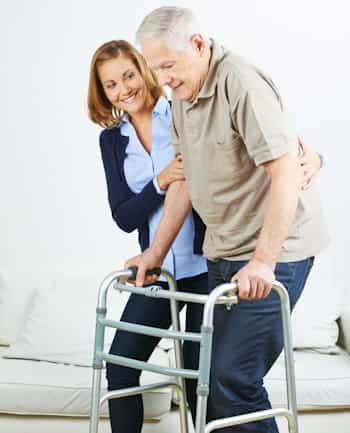


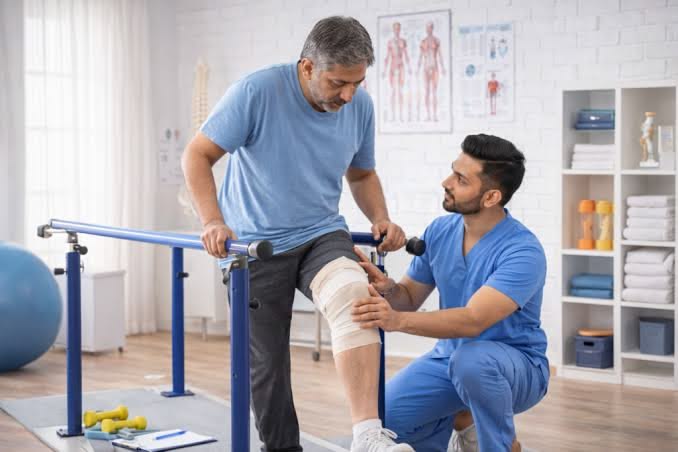
Have you recently undergone hip replacement surgery and are finding everyday movement harder than expected?
Perhaps you are struggling to get out of bed, stand from your lounge chair or walk comfortably using crutches or a walking frame. You may also be unsure which movements are safe, how much walking to do or when to begin strengthening your operated leg.
Recovering from hip surgery can take time, and the right rehabilitation plan depends on your operation, medical instructions and physical abilities.
If you live in Success, Western Australia, mobile physiotherapy allows you to receive professional assessment and rehabilitation in the comfort of your own home, without having to travel to a clinic while your mobility is limited.
At RAS Mobile Physiotherapy Perth, our AHPRA-registered physiotherapists provide home visits for people recovering from hip surgery, older adults, private clients and plan-managed or self-managed NDIS participants with eligible disability-related needs.
Our approach focuses on restoring or maintaining functional movement, building strength, improving walking and supporting safer daily activities.
Whether your goal is walking comfortably around your home, managing entrance steps or gradually returning to community activities, physiotherapy should be tailored to your recovery.
Looking for mobile physio in Success? Call 0435 267 763 to enquire about a home physiotherapy appointment.
What Is Mobile Physiotherapy in Success?
Mobile physiotherapy in Success is a service where a qualified physiotherapist visits your home to assess and manage pain, weakness, walking difficulties, balance problems and physical rehabilitation needs.
Instead of attending a clinic, treatment takes place in your usual living environment.
Home physiotherapy may include:
- Hip replacement rehabilitation
- Walking and gait assessment
- Lower limb strengthening
- Balance exercises
- Bed and chair transfer training
- Walking frame or crutch assessment
- Appropriate stair and step training
- Post-hospital rehabilitation
- Falls prevention
- Neurological rehabilitation
- Pain and joint movement assessment
- Individualised home exercise programs
- Family and carer education where appropriate
The benefit of home physiotherapy is that your physiotherapist can assess the movements you perform every day.
For example, you may be able to walk along a hospital corridor but struggle to move around your dining table or get into your own bed.
A home assessment allows these difficulties to form part of the rehabilitation plan.
Why Is Physiotherapy Important After Hip Replacement Surgery?
A hip replacement involves replacing damaged parts of the hip joint with artificial components.
The procedure is commonly performed for severe hip osteoarthritis, although it may also be used for other conditions or selected fractures.
Surgery can help address significant joint problems, but recovery also requires attention to movement, strength and everyday function.
Common difficulties after hip replacement
Following surgery, some patients experience:
- Hip or thigh discomfort
- Swelling
- Reduced muscle strength
- Difficulty walking
- Reduced balance
- Limited activity tolerance
- Difficulty standing from chairs
- Problems getting in or out of bed
- Difficulty managing stairs
- Uncertainty about safe movement
The severity and duration of these difficulties vary between people.
How can physiotherapy help?
Depending on the stage of recovery and surgical instructions, physiotherapy may focus on:
- Improving safe walking.
- Restoring functional muscle strength.
- Practising appropriate bed and chair transfers.
- Improving standing balance.
- Reviewing mobility aid use.
- Supporting safe movement around the home.
- Progressing prescribed exercises.
- Working towards meaningful daily activities.
A successful rehabilitation plan considers more than the hip joint alone.
Your balance, other medical conditions, preoperative strength, home environment and personal goals may all influence recovery.
What Happens During Recovery After Hip Replacement?
Recovery usually involves several stages, but there is no single timeline suitable for everyone.
Some patients return home relatively soon after surgery, while others require a longer hospital stay or additional rehabilitation.
Early postoperative recovery
In hospital, the treating team may help you begin suitable movements and walking when medically appropriate.
Your hospital physiotherapist may provide instructions about:
- Getting out of bed
- Standing and sitting
- Walking with a prescribed mobility aid
- Weight-bearing requirements
- Hip movement precautions
- Exercises to complete at home
- Managing stairs if necessary
- Essential daily activities
Returning home
After discharge, many patients need to continue prescribed exercises while gradually managing more of their everyday routine.
Common early goals include moving safely between rooms, using the bathroom and getting in and out of bed.
Rebuilding physical capacity
As recovery progresses, treatment may focus on appropriate hip strengthening, balance, walking endurance and functional mobility.
Returning to routine activities
Some people work towards gardening, shopping, household activities or appropriate community walking.
The timing depends on medical clearance and rehabilitation progress.
How long does full recovery take?
Many people notice progressive improvement over weeks and months.
However, the recovery period depends on the procedure, overall health, complications and physical function before surgery.
Your surgeon and physiotherapist should guide your individual rehabilitation timeline.
Understanding Hip Precautions After Surgery
One of the most important aspects of postoperative rehabilitation is following any precautions recommended by the surgical team.
Hip precautions are not identical for every patient.
They may differ according to:
- Surgical approach
- Type of procedure
- Whether the surgery was primary or revision replacement
- Joint stability
- Associated injuries or complications
- Individual instructions from the surgeon
Are all patients told not to bend their hip beyond 90 degrees?
No.
Some patients receive restrictions on particular hip movements, while others may have different precautions or fewer restrictions.
Do not assume that precautions given to another patient apply to your operation.
What about twisting or crossing your legs?
Certain movements may be restricted for particular patients.
The appropriate precautions should be clearly explained by your surgical team.
Why do precautions matter?
Some restrictions are intended to protect healing tissues and reduce complications, including hip dislocation.
Can a mobile physiotherapist review your precautions?
Yes.
A physiotherapist can review the instructions provided by your surgical team and help you understand how they relate to everyday movement.
If instructions are unclear, they should be confirmed with the treating team rather than guessed.
What about weight-bearing restrictions?
Some people can bear weight according to their tolerance, while others have specific limitations.
Always follow the weight-bearing status prescribed by your surgeon.
Do not increase weight-bearing or attempt restricted activities independently.
8 Signs You May Benefit From Home Physiotherapy After Hip Surgery
Some mobility problems are expected during recovery.
However, the following difficulties may indicate that a physiotherapy assessment or review would be useful.
1. You are struggling to walk with your prescribed aid
You may feel uncertain using crutches or a walking frame.
A physiotherapist can assess your walking pattern, balance and technique.
2. Getting out of bed is difficult
Reduced strength, discomfort or movement restrictions may affect bed transfers.
3. Standing from chairs requires assistance
Low or soft furniture may be particularly challenging during recovery.
4. You feel unsteady when turning
Changes in balance and walking control may increase the risk of losing stability.
5. Your operated leg feels weak
Hip muscle weakness may affect walking, standing and everyday mobility.
6. You are unsure how much walking to do
Some patients avoid activity because they fear damaging their new hip.
Others increase activity too quickly and experience symptom aggravation.
7. You are worried about entrance steps
Steps may require specific mobility techniques, strength and appropriate support.
8. You are not confident with your rehabilitation exercises
A physiotherapist can review your prescribed exercises, technique and progression.
These concerns are different from warning signs of a medical complication.
Severe or suddenly worsening pain, wound concerns or possible blood clot symptoms require prompt medical assessment.
Preparing Your Home for Hip Replacement Recovery
Your home environment can influence how safely you move after surgery.
Preparing important areas before the operation may reduce difficulties after discharge.
Bedroom
Consider whether your bed is accessible using the prescribed mobility aid.
A low or difficult-to-access bed may require further assessment.
Lounge room
Very low or unstable chairs may be unsuitable for some patients, particularly if movement precautions apply.
A physiotherapist or occupational therapist may advise on appropriate seating.
Bathroom
Toilet and shower transfers can be challenging after hip surgery.
An occupational therapist may recommend suitable equipment or changes to the environment.
Walking pathways
Remove unnecessary clutter from commonly used walking routes.
Keep essential items accessible without requiring movements that conflict with your precautions.
Entrance steps
Tell your hospital team if you have steps at the entrance to your property.
Family support
You may need temporary assistance with shopping, cooking, transport or household tasks.
Discharge information
Keep your hospital discharge summary, exercise instructions, medical restrictions and follow-up appointment details available.
These documents are useful for your home physiotherapy assessment.
How Physiotherapy Helps Rebuild Hip Strength
Weakness around the hip can affect walking, balance and functional movement.
During recovery, the muscles surrounding the operated joint may be less effective because of surgery, pain, swelling or reduced activity.
Hip abductor muscles
The hip abductors contribute to control of the pelvis and leg during standing and walking.
Weakness may affect walking stability.
Hip extensors
These muscles contribute to standing, walking and certain transfers.
Thigh muscles
The quadriceps and other leg muscles assist with everyday movement, even though the surgery involves the hip.
What may strengthening involve?
For suitable clients, physiotherapy may include:
- Prescribed hip muscle activation
- Appropriate seated exercises
- Supported standing exercises
- Lower limb strengthening
- Functional sit-to-stand training
- Walking practice
- Progressive resistance activities when permitted
Why is individual progression important?
Strengthening must account for:
- Surgical instructions
- Pain and swelling
- Weight-bearing status
- Muscle strength
- Balance
- Fatigue
- Other medical conditions
A difficult exercise is not automatically a better exercise.
Your physiotherapist should select a program appropriate to the stage of recovery.
Walking Rehabilitation After Hip Replacement
Walking is a major rehabilitation goal for many people after hip replacement.
Some patients use crutches or a walking frame temporarily. Others may need ongoing assistance because of additional health or mobility limitations.
What does walking assessment involve?
Your physiotherapist may review:
- Step length
- Walking speed
- Weight-bearing pattern
- Hip and knee movement
- Standing balance
- Turning
- Use of a walking aid
- Walking endurance
- Level of assistance required
Why might someone limp after surgery?
Limping may be associated with pain, weakness, changes in walking technique or other factors.
A physiotherapist can assess the pattern and determine whether further rehabilitation or medical review is needed.
When can you stop using crutches or a frame?
There is no universal date.
The decision depends on your strength, balance, gait quality, symptoms and postoperative instructions.
Reducing support too early may create a falls risk.
Should you walk longer every day?
Not necessarily.
Your walking program should follow the instructions provided by your treating team and be adapted according to recovery.
Some clients benefit from increasing activity gradually, while others need a modified approach because of symptoms or medical conditions.
Why practise walking at home?
The physiotherapist can assess your walking around the actual furniture, doorways and spaces you use daily.
This may help identify practical difficulties that are not obvious in a clinic.
Getting In and Out of Bed After Hip Replacement
Bed mobility can be difficult when pain, weakness or movement restrictions affect the operated hip.
A home physiotherapist may assess:
- Moving from lying to sitting
- Sitting balance
- Moving towards the bed edge
- Standing from the bedside
- Returning to bed
- Use of any recommended equipment
Should you use a particular sleeping position?
Follow the advice provided by your surgical team.
Recommendations can differ depending on the procedure and precautions.
What if your bed is too low?
The physiotherapist may recommend an occupational therapy or equipment assessment.
Improvised changes to furniture are not necessarily safe.
Can family members help with bed transfers?
They may assist when appropriate, but the assistance method should be consistent with your postoperative restrictions and individual care plan.
Avoid pulling or lifting in ways that place the operated hip or caregiver at risk.
Sitting, Standing and Car Transfers After Hip Surgery
Everyday transfers can be uncomfortable or difficult during early recovery.
Standing from a chair
Standing requires lower limb strength, balance and an appropriate movement technique.
A physiotherapist can assess how you stand from your usual furniture.
Sitting down
Some patients find controlled sitting difficult because of weakness or discomfort.
The physiotherapist may provide suitable movement education.
Using the toilet
Bathroom transfers may require additional equipment or environmental changes.
These should be assessed by the appropriate healthcare professional.
Getting into a car
Car transfers can be challenging when hip movement is restricted.
The recommended technique should reflect the surgical team’s instructions and the vehicle layout.
When can you drive again?
Driving should resume only when you meet your surgeon’s advice, legal requirements and insurance conditions.
You must be able to control the vehicle safely and should not drive while affected by medication that impairs driving.
Do not rely on a generic number of weeks to decide when driving is appropriate.
Stair Training After Hip Replacement
Managing stairs or entrance steps may be an important rehabilitation goal.
For some residents in Success, even a single step at the front door can become a challenge.
Why do steps feel difficult?
Stairs require:
- Lower limb strength
- Weight-bearing ability
- Balance
- Coordination
- Appropriate mobility aid use
- Confidence with movement
When can stair training begin?
Stair training should follow the hospital and surgeon’s instructions.
The physiotherapist needs to assess whether the person is physically ready.
Can a physiotherapist practise stairs at home?
Where clinically appropriate and safe, home physiotherapy may include supervised step or stair practice.
What if there is no handrail?
The environment may require further assessment or alternative arrangements.
Should you practise stairs alone?
Only when the treating team has established that you can manage them safely.
Do not attempt difficult stairs without suitable assistance or instruction.
Managing Pain, Swelling and Activity After Hip Replacement
Pain and swelling can occur during postoperative recovery.
However, symptoms should be monitored and managed according to the treating team’s recommendations.
How can pain affect rehabilitation?
Pain may limit walking, exercises and transfers.
Appropriate pain management is often important for participation in rehabilitation.
Medication should be taken only as prescribed or directed by the treating medical team.
How much swelling is normal?
Some postoperative swelling may occur, but significant changes or new symptoms should not be ignored.
What if activity makes pain worse?
Your physiotherapist can review exercise intensity, walking demands and symptom response.
Severe, unusual or persistent aggravation may require further medical assessment.
Should you rest all day?
Prolonged inactivity may affect strength and mobility.
However, activity must be medically appropriate and balanced with adequate recovery.
Can you use ice or other symptom-management strategies?
Follow the recommendations given by your surgical team, including precautions for skin protection and any circulation or sensation problems.
When is a medical review necessary?
Worsening wound symptoms, new calf pain or swelling, fever or severe unexpected pain require medical attention.
The physiotherapy program should not progress until serious concerns have been appropriately assessed.
Exercises That May Be Included in Hip Replacement Rehabilitation
The exercises used after hip replacement depend on the surgical approach, precautions, medical condition and stage of recovery.
The following are examples of activities a physiotherapist may prescribe for suitable patients.
| Exercise or activity | Potential purpose |
|---|---|
| Prescribed ankle movements | Support lower limb movement during early recovery |
| Quadriceps activation | Maintain or improve thigh muscle activation |
| Appropriate gluteal activation | Support hip muscle activation |
| Prescribed hip mobility exercises | Maintain suitable movement within precautions |
| Supported sit-to-stand | Functional strength and transfers |
| Appropriate standing hip exercises | Hip strength and control |
| Supported heel raises | Calf strength and standing control |
| Walking with prescribed aid | Improve gait and mobility |
| Supervised balance activities | Improve standing stability |
| Clinically appropriate step practice | Support functional stair ability |
How many repetitions should you perform?
Follow your individual exercise program.
Different operations and medical conditions require different levels of activity.
Are all hip exercises safe after surgery?
No.
Certain movements may be restricted or inappropriate during recovery.
Do not use a generic online exercise program as a substitute for the instructions provided by your treating team.
Should you push through pain?
Exercises should be performed according to medical advice and clinical assessment.
Severe pain or marked symptom aggravation requires modification or further review.
Can you strengthen your hip before surgery?
Some patients may benefit from suitable preoperative strengthening and exercise, subject to their medical condition and surgical advice.
Common Mistakes to Avoid During Hip Replacement Recovery
1. Following another patient’s hip precautions
Your restrictions may differ according to your operation.
Always follow your own surgical instructions.
2. Stopping the walking aid too early
Walking without adequate support before you are ready can increase falls risk.
3. Trying to do too much at once
Excessive walking or activity may aggravate symptoms.
4. Avoiding prescribed exercises
Failure to follow the rehabilitation plan may contribute to persistent weakness or functional difficulties.
5. Ignoring difficulties with transfers
If you struggle to get out of bed or stand from your lounge chair, these activities may need professional assessment.
6. Attempting challenging stairs independently
Steps should only be managed according to appropriate mobility and safety advice.
7. Comparing your recovery with someone else
Recovery varies depending on the operation, medical history and starting physical ability.
8. Ignoring warning signs
Possible infection, blood clot symptoms or other serious complications require prompt medical review.
Warning Signs After Hip Replacement Surgery
It is important to recognise symptoms that may indicate a postoperative complication.
Seek urgent medical assessment for:
- Increasing redness, warmth or discharge around the wound
- Fever with concerning wound symptoms
- Unexpectedly severe or worsening hip pain
- New significant calf pain, swelling or tenderness
- Sudden inability to weight-bear or move the hip as expected
- New severe deformity or symptoms suggesting dislocation
- Other significant changes in the operated leg
Call 000 immediately for:
- Sudden chest pain
- Severe or unexpected breathlessness
- Collapse or loss of consciousness
- Coughing blood with concerning breathing symptoms
- New stroke-like symptoms
- Other signs of a medical emergency
Do not wait for a routine physiotherapy appointment if you suspect a serious complication.
Aged Care Physiotherapy in Success
Older adults may experience reduced mobility after surgery, illness or prolonged inactivity.
Some people also have arthritis, neurological conditions or balance difficulties that influence their recovery.
RAS Mobile Physiotherapy Perth provides home-based physiotherapy for older adults with suitable rehabilitation needs.
Common aged care physiotherapy goals
- Improve or maintain walking ability
- Support recovery after hip or knee replacement
- Improve lower limb strength
- Address balance problems
- Reduce modifiable falls risk factors
- Improve bed and chair transfers
- Review walking aid use
- Improve functional endurance
- Support independence at home
- Example: An older adult recovering after hip replacement
Imagine an older adult living in Success who has recently returned home after hip replacement surgery.
They use a walking frame and can manage short distances but struggle to get out of their lounge chair.
They are also worried about the entrance step at their front door.
A physiotherapist may review their discharge instructions and assess walking, strength, balance and functional transfers.
Treatment may include prescribed exercises, mobility aid education and appropriate functional training.
If equipment or home modifications are needed, occupational therapy assessment may also be recommended.
The rehabilitation plan should focus on realistic goals rather than promising a particular recovery timeline.
Can Support at Home funding cover physiotherapy?
Eligible older Australians may receive approved physiotherapy through the government’s Support at Home program.
Access depends on an aged care assessment, approved needs and appropriate provider arrangements.
The Restorative Care Pathway may also provide coordinated short-term rehabilitation for eligible older people.
Patients should confirm the funding pathway and service arrangements before booking.
NDIS Physiotherapy in Success
RAS Mobile Physiotherapy Perth works with plan-managed and self-managed NDIS participants in Success and nearby suburbs.
NDIS physiotherapy may help address eligible disability-related limitations affecting walking, strength, balance and everyday movement.
What can NDIS physiotherapy support?
Depending on the participant’s needs, plan and funding criteria, physiotherapy may address:
- Disability-related walking difficulties
- Functional strength
- Balance and coordination
- Functional transfers
- Neurological rehabilitation
- Physical endurance
- Postural control
- Mobility aid education
- Individualised exercise programs
- Relevant functional maintenance goals
- Carer or support worker education
Does NDIS funding cover hip replacement rehabilitation?
Not automatically.
Ordinary postoperative rehabilitation is generally a responsibility of the mainstream health system.
The NDIS may fund eligible physiotherapy for ongoing disability-related functional needs when the support meets applicable criteria.
A participant should not assume that hip replacement rehabilitation is funded simply because they have an NDIS plan.
What if an NDIS participant has a neurological disability and needs hip surgery?
The treating team should distinguish between ordinary surgical recovery and ongoing disability-related therapy needs.
The purpose of treatment and available funding must be confirmed.
Plan-managed and self-managed participants
Plan-managed participants generally arrange invoices through their plan manager.
Self-managed participants arrange payments and claiming under their own funding arrangements.
NDIA-managed supports generally require an NDIS-registered provider.
RAS works with plan-managed and self-managed NDIS participants only and does not claim to be an NDIS-registered provider.
Other Home Physiotherapy Services in Success
Although this article focuses on hip replacement recovery, RAS Mobile Physiotherapy Perth also supports other rehabilitation needs.
Knee replacement rehabilitation
Suitable treatment may include knee movement, strengthening, walking and transfers.
Falls prevention
Balance and strengthening programs may help address modifiable falls risk factors.
Stroke rehabilitation
Home neurological physiotherapy may address walking, strength, balance and functional transfers.
Parkinson’s disease
Physiotherapy may include appropriate gait strategies, functional movement exercises and balance training.
Arthritis physiotherapy
Education, strengthening and movement programs may help people manage selected knee and hip arthritis-related difficulties.
Post-hospital rehabilitation
People recovering after illness or hospitalisation may need support with walking, strength and everyday mobility.
What Happens During Your First Home Physiotherapy Appointment?
The initial appointment helps the physiotherapist understand your surgery, medical instructions and functional limitations.
Step 1: Review medical information
Your physiotherapist may ask about:
- Type and date of hip surgery
- Surgical approach where known
- Weight-bearing restrictions
- Hip precautions
- Hospital discharge recommendations
- Current pain and swelling
- Walking aid use
- Relevant medical history
- Falls
- Rehabilitation goals
Step 2: Physical assessment
Depending on your condition, assessment may include:
- Lower limb strength
- Functional hip movement
- Walking pattern
- Balance
- Sit-to-stand ability
- Bed mobility
- Functional transfers
- Mobility aid use
Step 3: Home mobility assessment
The physiotherapist may assess how you move between rooms, get out of bed and stand from your usual furniture.
Step 4: Initial rehabilitation
Where clinically appropriate, treatment may include prescribed strengthening, walking practice, transfer training or movement education.
Step 5: Ongoing plan
The physiotherapist will discuss findings, rehabilitation goals, suitable home exercises and whether follow-up appointments are recommended.
Any unclear postoperative precautions should be confirmed with the surgical team.
How Can Recovery Progress Be Measured?
Rehabilitation progress should be assessed through meaningful clinical and functional goals.
Depending on the patient, measures may include:
- Lower limb strength
- Walking speed
- Walking distance
- Balance
- Sit-to-stand ability
- Functional transfers
- Step or stair performance
- Mobility aid requirements
- Level of assistance needed
- Pain and symptom response
- Personal rehabilitation goals
Examples of rehabilitation goals
| Current difficulty | Possible rehabilitation goal |
|---|---|
| Walking with a frame | Improve safe walking and appropriate equipment use |
| Difficulty getting out of bed | Improve bed mobility within postoperative precautions |
| Weak operated leg | Improve relevant lower limb strength |
| Trouble standing from a chair | Improve functional transfer performance |
| Poor balance | Improve standing stability through suitable exercises |
| Difficulty managing steps | Work towards safe step negotiation when appropriate |
| Reduced endurance | Gradually increase tolerated functional activity |
| Difficulty returning to everyday tasks | Improve movement for meaningful daily activities |
Progress should be reviewed over time.
For some people, recovery may be relatively straightforward. Others may need additional medical review or longer rehabilitation because of associated conditions.
Returning to Everyday Activities in Success
Success is a well-connected suburb within the City of Cockburn.
Local destinations include Cockburn Gateway Shopping City, while Success Regional Recreation Reserve provides sports and community facilities.
The nearby Cockburn Central precinct also includes transport and recreation destinations.
For someone recovering from hip surgery, a longer-term goal may be returning to suitable community activities.
Starting with indoor mobility
The initial focus may involve moving safely around the house, managing essential transfers and using a walking aid appropriately.
Progressing to short outdoor activity
When clinically appropriate, rehabilitation may progress towards short outdoor walking.
Managing shopping and community environments
Shopping centres can involve longer walking distances, hard flooring, crowds, changes of direction and fatigue.
They may be more physically demanding than short walks at home.
Can you return to walking around Cockburn Gateway?
For some people, this may become a meaningful goal once the treating team considers it appropriate.
However, there is no universal point in recovery when shopping-centre walking is safe for every patient.
Your walking aid needs, endurance, balance and hip precautions should guide progression.
Why does community mobility matter?
Regaining confidence with everyday activities can be an important part of functional recovery.
For one person, this may mean walking to their letterbox.
For another, it may involve returning to suitable shopping or social activities with appropriate support.
Funding and Payment Options for Mobile Physio Success
RAS Mobile Physiotherapy Perth supports several funding arrangements.
Private physiotherapy
Private clients can generally book home physiotherapy without needing a GP referral.
Aged care physiotherapy
Eligible older Australians may access approved physiotherapy through Support at Home or another applicable aged care arrangement.
Restorative Care Pathway
Eligible older people with assessed rehabilitation needs may receive short-term coordinated allied health services through this pathway.
NDIS physiotherapy
RAS works with plan-managed and self-managed participants when physiotherapy meets the relevant disability-related criteria.
Routine postoperative hip replacement rehabilitation is not automatically NDIS-funded.
Private health insurance
Some private health funds provide physiotherapy benefits.
Coverage depends on the policy, practitioner eligibility and claiming arrangements.
Clients should confirm benefits directly with their insurer.
How much does mobile physiotherapy cost?
Fees depend on the appointment type, funding arrangement and any applicable travel charges.
Contact RAS Mobile Physiotherapy Perth for current pricing and availability.
Mobile Physio Success and Surrounding Suburbs
RAS Mobile Physiotherapy Perth provides home visits in Success and surrounding Perth suburbs, subject to service coverage and clinician availability.
Nearby suburbs include:
- Cockburn Central
- Beeliar
- Atwell
- Aubin Grove
- Yangebup
- South Lake
- Jandakot
- Treeby
- Hammond Park
- Bibra Lake
- North Lake
- Coolbellup
- Spearwood
- Leeming
- Murdoch
- Kardinya
- Piara Waters
- Canning Vale
- Banjup
- Wattleup
Success includes residential neighbourhoods around Beeliar Drive, Wentworth Parade and the Cockburn Gateway precinct.
Residents near Cockburn Gateway, Success Regional Recreation Reserve and surrounding residential streets can contact the team to enquire about home visit availability.
If you are outside Success, we can discuss whether your address is within our service coverage.
Why Choose RAS Mobile Physiotherapy Perth?
RAS Mobile Physiotherapy Perth provides:
- AHPRA-registered physiotherapists
- Home-based physiotherapy assessments
- Hip replacement rehabilitation
- Post-operative strengthening
- Walking and balance training
- Functional transfer rehabilitation
- Appropriate stair assessment
- Mobility aid education
- Aged care physiotherapy
- Plan-managed and self-managed NDIS physiotherapy
- Falls prevention
- Neurological physiotherapy
- Post-hospital recovery
- Individualised home exercise programs
- Family and carer education where appropriate
Our approach focuses on individual needs and practical rehabilitation.
For one client, the priority may be moving safely around the house with a walking frame.
For another, it may be improving hip strength, getting out of bed more comfortably or working towards suitable community activities.
Treatment should respect your surgical instructions and progress at an appropriate pace.
Frequently Asked Questions About Mobile Physio Success
1. Do you provide mobile physiotherapy in Success?
Yes. RAS Mobile Physiotherapy Perth provides home visit physiotherapy in Success, WA 6164, subject to clinician and appointment availability.
2. Can a physiotherapist visit my home after hip replacement surgery?
Yes. Home physiotherapy may help with walking, strengthening, balance, transfers and functional recovery after hip replacement, according to your surgical instructions.
3. How soon after hip replacement can I start home physiotherapy?
Physiotherapy often begins in hospital when medically appropriate. The timing of home treatment depends on your discharge plan, medical stability and rehabilitation needs.
4. Do all patients have the same hip precautions after surgery?
No. Hip precautions vary according to the surgical approach, operation and surgeon’s recommendations. Always follow your individual postoperative instructions.
5. Can physiotherapy help me walk without crutches or a frame?
Physiotherapy may help improve strength, balance and walking ability. Reducing walking aid support depends on clinical assessment and your postoperative restrictions.
6. Can a physiotherapist help me get in and out of bed safely?
Yes. A physiotherapist can assess bed mobility and provide suitable movement training or recommend further equipment assessment while respecting your hip precautions.
7. Can home physiotherapy help with stairs after hip surgery?
Yes, where clinically appropriate. Stair practice should follow your surgeon’s instructions and be based on your strength, balance and weight-bearing status.
8. How long does hip replacement recovery take?
Recovery varies between patients. Improvements can continue over several months, and the appropriate timeline depends on the procedure, medical conditions and rehabilitation progress.
9. Is swelling normal after hip replacement?
Some swelling can occur after surgery. However, unusual or increasing swelling, particularly with calf pain, fever or wound changes, requires medical assessment.
10. Can I receive home physiotherapy before hip replacement surgery?
Yes. Suitable preoperative physiotherapy may help with strength, movement and preparation for recovery, subject to your medical condition and surgical advice.
11. Do you provide aged care physiotherapy in Success?
Yes. RAS provides home physiotherapy for older adults with suitable rehabilitation needs, including postoperative recovery, weakness, balance and mobility.
12. Can Support at Home funding cover physiotherapy after hip replacement?
Eligible older adults may access approved physiotherapy through Support at Home, depending on assessed needs, funding and provider arrangements.
13. Do you provide NDIS physiotherapy in Success?
Yes. RAS works with plan-managed and self-managed NDIS participants for appropriate disability-related physiotherapy supports.
14. Does the NDIS automatically fund hip replacement rehabilitation?
No. Ordinary postoperative rehabilitation is generally a mainstream healthcare responsibility. NDIS funding must meet the applicable disability-related support criteria.
15. Do I need a GP referral for private home physiotherapy?
A GP referral is generally not required for private physiotherapy. You should provide your surgical discharge instructions and any relevant movement or weight-bearing restrictions.
16. How do I book mobile physio in Success?
Call RAS Mobile Physiotherapy Perth on 0435 267 763 or enquire through the website to discuss your rehabilitation needs, funding arrangements and appointment availability.
Book Mobile Physio in Success
If you or a family member is recovering from hip replacement surgery and struggling with walking, transfers, balance or everyday movement, home physiotherapy may provide practical rehabilitation support.
RAS Mobile Physiotherapy Perth supports private clients, older adults and plan-managed or self-managed NDIS participants with appropriate home-based physiotherapy services.
Our focus is on helping people regain or maintain functional movement, improve mobility and work towards meaningful rehabilitation goals.
Call 0435 267 763 to enquire about mobile physio in Success.
Website: https://rasmobilephysioperth.com.au/
Email: info@rasmobilephysioperth.com.au
Medical advice: Follow your surgeon’s postoperative instructions. Suspected dislocation, infection, blood clot or another serious complication requires urgent medical attention. Call 000 for a medical emergency.