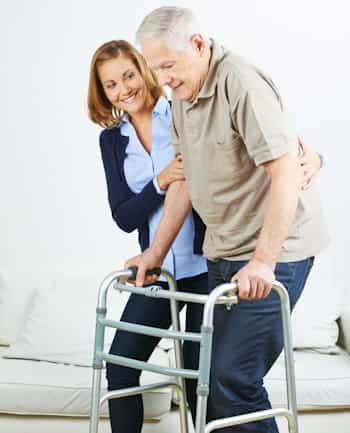



Do you become tired after walking a short distance? Perhaps you can move comfortably around your home but struggle to walk to the letterbox, visit nearby shops or participate in activities you previously enjoyed.
For some people, walking difficulties develop gradually as strength and endurance decline. Others experience changes following illness, hospitalisation, surgery or a neurological condition.
When walking becomes difficult, people may begin avoiding outdoor activities, relying more on family members or spending more time at home.
If you live in Yangebup, Western Australia, mobile physiotherapy allows you to receive professional assessment, walking rehabilitation and strengthening exercises in your own home.
At RAS Mobile Physiotherapy Perth, our AHPRA-registered physiotherapists provide home visits for older adults, private clients, and plan-managed or self-managed NDIS participants.
We support people experiencing reduced walking endurance, poor balance, muscle weakness, neurological conditions, arthritis and mobility limitations after illness or surgery.
Our focus is on helping you improve or maintain functional mobility, build walking confidence and work towards meaningful everyday activities.
Whether your goal is walking safely between rooms, managing a short outdoor walk or returning to suitable community activities, rehabilitation should reflect your individual needs.
Looking for mobile physio in Yangebup? Call 0435 267 763 to enquire about a home appointment.
What Is Mobile Physiotherapy in Yangebup?
Mobile physio in Yangebup is a service where a qualified physiotherapist visits your home to assess walking, balance, strength, pain and physical rehabilitation needs.
Instead of travelling to a clinic, physiotherapy takes place in your usual living environment.
Depending on your condition, a home visit may include:
- Walking and gait assessment
- Physical endurance assessment
- Muscle strength testing
- Standing balance assessment
- Falls risk screening
- Walking aid review
- Functional transfer training
- Post-hospital rehabilitation
- Post-operative physiotherapy
- Neurological rehabilitation
- Pain and arthritis management
- Individualised home exercise programs
- Family and carer education when appropriate
Home physiotherapy can be particularly useful when travelling is difficult because of weakness, disability, pain, fatigue or reduced mobility.
It also allows your physiotherapist to observe the challenges you experience in everyday life.
For example, you may walk comfortably through your lounge room but become tired walking from the front door to your letterbox.
You might also struggle with an entrance step or feel unsteady while turning around furniture.
These functional difficulties can be considered during your assessment and rehabilitation planning.
Why Is Walking Endurance Important?
Walking endurance refers to your ability to continue walking for a period of time or distance before needing to stop.
It is influenced by muscle strength, cardiovascular fitness, balance, coordination, joint mobility and general health.
For some people, reduced endurance is one of the first signs that everyday physical capacity has changed.
Walking is part of daily independence
Walking allows many people to:
- Move between rooms
- Access the bathroom and kitchen
- Reach the letterbox
- Walk through a garden
- Visit local shops
- Attend family gatherings
- Participate in community activities
When walking endurance decreases, these activities may become more difficult.
Reduced endurance can affect confidence
Someone who becomes tired quickly may worry about being unable to return home after an outdoor walk.
They may begin avoiding activities that involve standing or walking for longer periods.
Activity levels may decline
Reducing physical activity can contribute to further loss of strength and endurance in some people.
However, reduced walking ability is not always caused by inactivity, and medical causes must be considered.
What is the goal of walking rehabilitation?
The goal is not simply walking the greatest possible distance.
For one person, success may mean safely walking to the bathroom.
For another, it may mean increasing walking tolerance enough to manage an appropriate shopping trip with rest breaks.
Rehabilitation should focus on meaningful everyday activities.
8 Signs You May Benefit From Walking Rehabilitation
Changes in walking ability may indicate that physiotherapy assessment is appropriate.
1. You become tired after walking between rooms
You may need to stop after walking from your bedroom to the kitchen.
Reduced strength or endurance may contribute, but persistent or worsening fatigue also requires medical consideration.
2. You walk more slowly than before
Changes in walking speed may reflect weakness, pain, reduced confidence or neurological problems.
3. You need frequent rest breaks
If activities that were previously manageable now require repeated rests, an assessment can help identify possible contributing factors.
4. You avoid walking outdoors
Some people stop walking outside because of concerns about distance, balance, pain or fatigue.
5. You struggle with stairs, kerbs or uneven ground
Outdoor walking may require greater balance, strength and coordination than walking on a level indoor surface.
6. You need a walking stick or frame
A walking aid may provide useful support.
However, it should suit your physical abilities and environment.
7. You feel unsteady when turning
Difficulty changing direction can affect walking safety, particularly in crowded or unfamiliar environments.
8. Your family notices that you are becoming less active
Family members may notice that someone has stopped gardening, shopping or participating in regular activities because movement has become more difficult.
New, unexplained or rapidly worsening walking difficulties should be medically assessed.
Sudden weakness, chest pain, severe breathlessness or other emergency symptoms require urgent care.
What Causes Reduced Walking Endurance?
Reduced walking endurance can have several causes.
Some respond to appropriate rehabilitation, while others require medical investigation or ongoing management.
Muscle weakness
Weakness in the hips, thighs and calves may increase the effort required for walking.
Reduced physical conditioning
Periods of inactivity can reduce strength and physical fitness.
This may happen after illness, surgery or hospitalisation.
Joint pain and arthritis
Knee, hip or back pain can limit walking distance.
Someone may shorten their steps or avoid activities that cause discomfort.
Balance difficulties
Poor balance can make walking more demanding.
A person may use additional effort concentrating on every step or rely heavily on a mobility aid.
Neurological conditions
Stroke, Parkinson’s disease and multiple sclerosis may affect gait, coordination, strength and endurance.
Cardiovascular or respiratory conditions
Heart and lung conditions can affect exercise tolerance.
Reduced endurance associated with unusual breathlessness, chest symptoms or other concerning signs must be medically assessed.
Persistent fatigue
Some people experience significant fatigue related to ongoing health conditions.
For individuals with post-exertional malaise, including some people with ME/CFS or long COVID, automatically increasing exercise intensity may worsen symptoms.
Why identifying the cause matters
Physiotherapy should not assume that every person who walks slowly is simply unfit.
An appropriate medical history, physical assessment and referral when necessary help determine a suitable management approach.
How Does a Physiotherapist Assess Walking Difficulties?
The first step is understanding why walking has become harder.
Your physiotherapist may assess several physical and functional factors.
Walking pattern
The therapist may observe:
- Walking speed
- Step length
- Foot clearance
- Turning ability
- Balance during walking
- Use of a mobility aid
- Level of assistance needed
Muscle strength
Lower limb strength is important for walking, standing and stepping.
Balance
The physiotherapist may assess standing stability and movement-related balance.
Functional endurance
Where clinically appropriate, the therapist may assess how much walking the person can tolerate before resting.
Pain and joint movement
Knee, hip, back or foot problems may affect walking.
Medical symptoms
Fatigue, dizziness, shortness of breath and other symptoms may influence assessment and the need for medical review.
Individual goals
Someone who wants to walk safely through the home has different rehabilitation priorities from someone hoping to return to outdoor community activities.
The assessment should reflect those goals.
How Home Physiotherapy Can Help Rebuild Walking Endurance
An appropriate rehabilitation plan aims to improve physical capacity while respecting medical conditions and safety.
Step 1: Establish the starting point
The physiotherapist identifies the person’s current walking ability, symptoms, strength, balance and assistance requirements.
Step 2: Agree on realistic goals
Examples may include:
- Walking safely between rooms
- Improving confidence when turning
- Managing short distances with a walking frame
- Increasing tolerated walking activity
- Walking to the letterbox
- Returning to suitable local activities
- Step 3: Begin with appropriate activity
Some people may start with short walking practice or functional movements around the home.
Others may need further medical assessment before increasing activity.
Step 4: Address strength and balance limitations
Walking endurance is not always improved through walking alone.
Strengthening and balance rehabilitation may also be important.
Step 5: Review symptom response
The physiotherapist considers pain, fatigue, breathlessness, balance and recovery after exercise.
Progression should not rely solely on achieving a preset distance.
Step 6: Adjust the program
For people with uncomplicated physical deconditioning, suitable progression may improve walking tolerance over time.
For people with significant medical conditions or post-exertional symptom worsening, the approach may need to focus on pacing, symptom management and medical coordination.
Why gradual progression matters
Trying to increase walking distance too quickly can lead to excessive fatigue, pain or unsafe movement.
The correct progression is individual.
Strength and Balance Rehabilitation for Walking
Walking requires coordinated movement of the legs, trunk and nervous system.
Strengthening and balance exercises may support walking rehabilitation when appropriate.
Lower limb strengthening
Exercises may target the quadriceps, hip muscles and calf muscles.
These muscles contribute to standing, stepping and walking.
Sit-to-stand training
Standing from a chair is a practical functional activity that involves lower limb strength and balance.
Standing balance
Supported standing exercises may help address stability.
Dynamic balance
When suitable, activities may involve stepping, turning and changes in direction.
Functional exercises
Rehabilitation may include activities such as moving around furniture, practising safe transfers or managing appropriate steps.
Why home rehabilitation is useful
The physiotherapist can observe how the person manages their usual furniture, hallways and available walking space.
This can help connect strengthening exercises with real-life movement challenges.
Walking Aids and Community Mobility
Some people need a walking aid to maintain mobility or reduce physical demands during everyday activities.
Common devices include:
- Walking sticks
- Pick-up walking frames
- Front-wheeled frames
- Four-wheeled walkers
- Other prescribed mobility aids
Does using a walker mean rehabilitation is unsuccessful?
No.
A suitable mobility aid may help someone remain active and participate in daily life.
For some people, the device is temporary.
For others, continued use is an appropriate long-term strategy.
What can physiotherapy assess?
The physiotherapist may review:
- Device suitability
- Walking technique
- Height and positioning
- Turning ability
- Brake use where applicable
- Functional safety
- Walking endurance
- Suitability for indoor and outdoor environments
What about walking outdoors?
Walking aids should be used only in environments that are appropriate for the device and the person’s physical abilities.
A four-wheeled walker may be suitable for some clients but inappropriate for others.
Uneven ground, slopes and kerbs can create additional challenges.
An individual assessment is important.
Aged Care Physiotherapy in Yangebup
Older adults may experience changes in strength, balance and endurance that affect their ability to remain active at home.
Some people also live with arthritis, neurological conditions or other health problems that influence walking.
RAS Mobile Physiotherapy Perth provides home physiotherapy for older adults with appropriate rehabilitation needs.
Common aged care physiotherapy goals
- Improve or maintain walking ability
- Build suitable lower limb strength
- Improve balance
- Reduce modifiable falls risk factors
- Improve transfers
- Support mobility aid use
- Manage arthritis-related movement limitations
- Recover function after illness
- Maintain physical endurance
- Support daily independence
Example: An older adult who has stopped outdoor walking
Imagine an older resident living in Yangebup who previously enjoyed short neighbourhood walks.
They now become tired after walking around the house and feel uncertain about managing longer distances.
A physiotherapist may assess lower limb strength, balance, walking pattern and functional endurance.
Depending on the findings, treatment could involve appropriate strengthening, walking practice and education about safe activity progression.
The goal may be to improve comfortable indoor walking before considering suitable outdoor activities.
This is an illustrative example rather than a guaranteed outcome.
Can Support at Home fund physiotherapy?
The Australian Government’s Support at Home program, introduced in November 2025, includes clinical supports such as physiotherapy for eligible older people with approved care needs.
Access depends on aged care assessment, approved services and provider arrangements.
What about restorative care?
The Restorative Care Pathway may provide short-term coordinated rehabilitation for eligible older people experiencing functional decline following illness or injury.
An assessment and approval are required.
NDIS Physiotherapy in Yangebup
RAS Mobile Physiotherapy Perth supports plan-managed and self-managed NDIS participants in Yangebup and surrounding suburbs.
Physiotherapy may help address eligible disability-related physical limitations affecting walking, transfers, balance and community participation.
What can NDIS physiotherapy support?
Depending on the participant’s needs and funding, treatment may address:
- Disability-related walking limitations
- Functional balance
- Muscle strength
- Neurological rehabilitation
- Physical endurance
- Functional transfers
- Postural control
- Mobility aid education
- Home exercise programs
- Appropriate functional maintenance goals
- Carer and support worker education
- Relevant community mobility goals
Example: A participant working towards community access
A participant with a neurological condition may be able to walk short distances indoors using a mobility aid but struggle with longer walks.
The participant’s goal may involve improving suitable mobility for community activities.
A physiotherapist can assess walking, strength, balance and endurance, then develop a program aligned with the individual’s functional goals.
Progress can be reviewed against relevant outcome measures.
Is community walking automatically NDIS-funded?
No.
NDIS-funded therapy must meet relevant criteria, relate to the participant’s disability and be consistent with their funding arrangements.
General fitness or ordinary medical rehabilitation is not automatically an NDIS-funded support.
Plan-managed and self-managed participants
Plan-managed participants usually arrange invoices through their plan manager.
Self-managed participants manage payment and claiming under their own arrangements.
NDIA-managed supports generally require an NDIS-registered provider.
RAS works with plan-managed and self-managed participants only and does not claim to be an NDIS-registered provider.
Neurological Physiotherapy and Walking Rehabilitation
Neurological conditions can affect how someone walks and moves.
Home physiotherapy may be appropriate for people living with conditions such as:
- Stroke
- Parkinson’s disease
- Multiple sclerosis
- Acquired brain injury
- Spinal cord injury
- Other neurological conditions affecting mobility
Stroke rehabilitation
After stroke, physiotherapy may address walking pattern, strength, balance, transfers and endurance.
Some people experience foot drop or reduced control of one leg.
Treatment should reflect the person’s neurological impairments and functional goals.
Parkinson’s disease
People with Parkinson’s may experience smaller steps, turning problems, freezing or reduced walking confidence.
Physiotherapy may include appropriate gait strategies, cueing, balance exercises and functional movement practice.
Multiple sclerosis
Some people with multiple sclerosis experience fatigue, weakness and balance difficulties.
Rehabilitation should consider symptom variability and avoid inappropriate exercise progression.
Acquired brain injury
Physiotherapy may address walking, coordination, strength and functional independence.
Some individuals require additional strategies because of cognitive or behavioural changes.
Why goals differ
Not every person can safely progress towards independent community walking.
For some clients, maintaining indoor mobility or reducing the assistance required for transfers may be more appropriate.
Post-Hospital and Post-Operative Rehabilitation
Some people experience reduced walking endurance after illness, surgery or a hospital stay.
A previously independent person may temporarily require additional walking support or more rest breaks.
Rehabilitation after illness
Physiotherapy may focus on suitable strengthening, balance, walking practice and functional activity.
Knee replacement rehabilitation
Following knee replacement, treatment may include knee movement, quadriceps strengthening, walking and transfers.
Hip replacement rehabilitation
Home physiotherapy may support appropriate walking, strengthening and mobility aid use.
Fracture rehabilitation
The program must follow medical instructions, including any weight-bearing restrictions.
Why medical clearance matters
Walking endurance rehabilitation should reflect the person’s medical condition.
New chest pain, significant breathlessness, fainting or other concerning symptoms need appropriate medical assessment.
Home physiotherapy complements necessary medical and surgical follow-up.
Returning to Outdoor Walking and Community Activities in Yangebup
For some clients, improving indoor walking is the first stage of rehabilitation.
Their longer-term goal may involve participating in activities around Yangebup.
The suburb includes Yangebup Lake, Little Rush Lake Reserve, Nicholson Reserve and local community facilities.
The City of Cockburn has introduced accessible gate arrangements for eligible mobility aid users at Little Rush Lake Reserve.
These facilities may help some residents participate in local outdoor activities, but accessibility needs to be considered individually.
Why outdoor walking is more demanding
Outdoor environments may involve:
- Longer walking distances
- Kerbs and changes in ground level
- Uneven or loose surfaces
- Slopes
- Weather conditions
- Other pedestrians
- Increased balance demands
Can everyone safely walk around Yangebup Lake?
No.
The lake reserve environment contains a mixture of walking surfaces, and some paths may be unsuitable for people with limited mobility.
A person’s ability to access any particular route depends on their physical capacity, walking aid requirements and the route’s current condition.
Developing meaningful community goals
For one person, the goal may be walking to the front gate.
For another, it may involve moving safely through a shopping area with appropriate assistance.
Some may wish to return to a suitable community centre or outdoor recreation space.
A physiotherapist can help establish realistic physical rehabilitation goals while considering safety.
The importance of rest and pacing
Outdoor activities may require more endurance than moving around the home.
Suitable rest opportunities, transport, assistance and equipment should be considered.
The goal is meaningful participation rather than walking the longest possible distance.
Common Exercises Used in Walking Rehabilitation
Exercises should be selected after an individual physiotherapy assessment.
Examples may include:
| Exercise or activity | Potential purpose |
|---|---|
| Supported sit-to-stand | Functional leg strength |
| Seated knee extensions | Quadriceps strengthening |
| Seated marching | Hip movement and muscle activation |
| Supported heel raises | Calf strength |
| Individualised hip strengthening | Support lower limb movement |
| Supported weight shifting | Standing balance |
| Supervised stepping practice | Functional stepping control |
| Appropriate turning practice | Walking balance |
| Short walking activities | Gait and functional endurance |
| Rest and activity planning | Support appropriate pacing |
How much walking should someone start with?
There is no single distance suitable for everyone.
The starting point depends on physical ability, symptoms, medical conditions and safety.
Should walking increase every day?
Not necessarily.
Progression should reflect the person’s response, rather than a rigid daily increase.
Can walking replace strengthening exercises?
Walking is useful, but some people also benefit from targeted strength and balance rehabilitation.
What if exercise causes significant fatigue?
The program should be reviewed.
Severe or delayed symptom worsening requires careful assessment, particularly in people with fatigue-related conditions.
What Happens During Your First Home Physiotherapy Appointment?
Your first appointment allows the physiotherapist to assess your condition and discuss realistic rehabilitation goals.
Step 1: Discussing your concerns
The physiotherapist may ask about:
- Walking difficulties
- Fatigue and endurance
- Medical history
- Pain
- Falls
- Previous surgery or hospitalisation
- Neurological conditions
- Mobility aids
- Everyday activities
- Rehabilitation goals
Step 2: Physical assessment
Depending on your needs, assessment may include:
- Muscle strength
- Joint movement
- Walking pattern
- Balance
- Functional transfers
- Endurance
- Mobility aid use
- Relevant neurological findings
Step 3: Functional assessment at home
The physiotherapist may observe how you walk between rooms, turn, stand from furniture and manage everyday movement.
Step 4: Initial treatment
Where clinically appropriate, treatment may include strengthening, balance exercises, walking practice or education.
Step 5: Rehabilitation planning
The physiotherapist will discuss findings, a suitable home exercise program and whether follow-up appointments are recommended.
The program should be adjusted according to your condition, progress and goals.
How Is Walking Rehabilitation Progress Measured?
Progress should be based on meaningful functional outcomes.
Depending on the person’s abilities, the physiotherapist may use:
- Walking distance
- Walking speed
- Timed Up and Go
- Two-Minute Walk Test
- Six-Minute Walk Test
- Sit-to-stand performance
- Balance assessment
- Mobility aid requirements
- Level of assistance needed
- Individual rehabilitation goals
Not every test is appropriate for every client.
For example, a six-minute walking assessment may be unsuitable for someone with very limited mobility or a medical condition requiring additional precautions.
Examples of rehabilitation goals
| Current difficulty | Example goal |
|---|---|
| Walking only short distances indoors | Improve safe functional walking |
| Reduced leg strength | Improve lower limb capacity |
| Difficulty turning | Improve controlled direction changes |
| Poor balance | Improve stability during suitable movement |
| Reduced activity after hospitalisation | Rebuild appropriate walking tolerance |
| Difficulty managing an aid | Improve safe mobility aid use |
| Disability-related community limitations | Work towards relevant participation goals |
| Persistent fatigue | Establish sustainable activity levels based on symptoms |
Progress should be reviewed individually.
For some people, maintaining their current walking ability may be a valuable outcome.
Funding and Payment Options for Mobile Physio Yangebup
RAS Mobile Physiotherapy Perth provides services through several funding pathways.
Private physiotherapy
Private clients can generally arrange physiotherapy without needing a GP referral.
Aged care physiotherapy
Eligible older adults may receive approved physiotherapy under Support at Home or other applicable aged care arrangements.
The relevant provider arrangements should be confirmed before treatment.
Restorative Care Pathway
Eligible older Australians may receive time-limited coordinated rehabilitation through this Support at Home pathway following an approved aged care assessment.
NDIS physiotherapy
RAS works with plan-managed and self-managed NDIS participants for eligible disability-related physiotherapy supports.
Private health insurance
Some private health funds provide physiotherapy benefits.
Clients should confirm their cover, practitioner eligibility and claiming arrangements with their insurer.
How much does mobile physiotherapy cost?
Fees depend on the appointment type, funding arrangement and any applicable travel charges.
Contact RAS Mobile Physiotherapy Perth for current pricing and availability.
Mobile Physio Yangebup and Nearby Suburbs
RAS Mobile Physiotherapy Perth provides home visits in Yangebup and surrounding Perth suburbs, subject to clinician availability and service coverage.
Nearby suburbs include:
- South Lake
- Bibra Lake
- Beeliar
- Success
- Cockburn Central
- Jandakot
- Spearwood
- Munster
- Coogee
- Hamilton Hill
- Coolbellup
- North Lake
- Atwell
- Treeby
- North Coogee
- Murdoch
- Leeming
- Kardinya
- Aubin Grove
- Canning Vale
Yangebup is a residential suburb within the City of Cockburn, with local community facilities and reserves around Yangebup Road, Osprey Drive, Beeliar Drive and surrounding streets.
Residents near Yangebup Lake, Little Rush Lake, Nicholson Reserve and local community centres can enquire about home visit availability.
If you live outside Yangebup, contact our team to confirm whether your address falls within our service area.
Why Choose RAS Mobile Physiotherapy Perth?
RAS Mobile Physiotherapy Perth provides:
- AHPRA-registered physiotherapists
- Individualised home assessments
- Walking endurance rehabilitation
- Strength and balance exercises
- Falls prevention
- Mobility aid education
- Aged care physiotherapy
- Plan-managed and self-managed NDIS physiotherapy
- Neurological rehabilitation
- Post-hospital recovery
- Post-operative physiotherapy
- Pain and mobility management
- Home exercise programs
- Family and carer education where appropriate
Our approach focuses on improving or maintaining physical function in ways that matter to the individual.
For one person, that may mean walking safely between rooms.
For another, it may mean managing a longer indoor distance, improving endurance with appropriate rest breaks or working towards suitable community activities.
Frequently Asked Questions About Mobile Physio Yangebup
1. Do you provide mobile physiotherapy in Yangebup?
Yes. RAS Mobile Physiotherapy Perth provides home visit physiotherapy in Yangebup, WA 6164, subject to clinician and appointment availability.
2. Can a physiotherapist help if I get tired after walking a short distance?
Yes. A physiotherapist can assess walking ability, strength, balance and endurance. Unexplained or worsening fatigue may also require medical assessment.
3. Can home physiotherapy improve walking endurance?
Physiotherapy may help improve walking tolerance through individually selected strengthening, walking practice and appropriate activity progression when clinically suitable.
4. Can a physiotherapist help me walk outdoors again?
Physiotherapy may support suitable outdoor mobility goals by addressing strength, balance, walking ability and endurance. Outdoor activity must be appropriate for your condition and safety.
5. Is walking enough to improve leg strength?
Walking is beneficial, but some people also need targeted strengthening exercises to address specific muscle weakness.
6. Can physiotherapy help if I need frequent rest breaks?
Physiotherapy can assess physical limitations and support appropriate pacing or rehabilitation. Frequent or unexplained fatigue should also be medically reviewed.
7. Do you provide aged care physiotherapy in Yangebup?
Yes. RAS provides home physiotherapy for older adults with suitable needs involving weakness, balance, walking, falls risk and reduced independence.
8. Can Support at Home funding cover walking rehabilitation?
Eligible older adults may receive approved physiotherapy through Support at Home, depending on assessed needs, available services and provider arrangements.
9. What is the Restorative Care Pathway?
It is a short-term aged care pathway for eligible older Australians requiring coordinated allied health or nursing support to regain or maintain physical function.
10. Do you provide NDIS physiotherapy in Yangebup?
Yes. RAS works with plan-managed and self-managed NDIS participants for appropriate disability-related physiotherapy supports.
11. Can NDIS physiotherapy help with community mobility goals?
It may, when the therapy addresses eligible disability-related functional needs and meets the relevant NDIS funding criteria.
12. Can mobile physiotherapy help after hospital discharge?
Yes. Home physiotherapy may support suitable clients experiencing reduced strength, balance or walking endurance following hospitalisation.
13. Do you provide stroke or Parkinson’s physiotherapy at home?
Yes. Suitable neurological physiotherapy may address walking, balance, strength, transfers and functional mobility goals.
14. Can a physiotherapist check my walking stick or walking frame?
Yes. A physiotherapist can assess how you use a walking aid and advise on suitable positioning, technique or further equipment assessment.
15. Do I need a GP referral for home physiotherapy?
A GP referral is generally not required for private physiotherapy. Some funded services, medical circumstances or insurance arrangements may have additional requirements.
16. How do I book mobile physio in Yangebup?
Call RAS Mobile Physiotherapy Perth on 0435 267 763 or enquire through the website to discuss your needs, funding arrangements and appointment availability.
Book Mobile Physio in Yangebup
If walking has become more tiring, your balance feels less reliable or you are avoiding activities because of reduced mobility, home physiotherapy may provide an opportunity for professional assessment and rehabilitation.
RAS Mobile Physiotherapy Perth supports private clients, older adults and plan-managed or self-managed NDIS participants with individualised physiotherapy at home.
Our focus is on helping people improve or maintain walking ability, strength, balance and meaningful everyday participation.
Call 0435 267 763 to enquire about mobile physio in Yangebup.
Website: https://rasmobilephysioperth.com.au/
Email: info@rasmobilephysioperth.com.au
Medical advice: New chest pain, severe or sudden breathlessness, fainting, sudden weakness or other emergency symptoms require urgent medical care. Call 000 in Australia for an emergency.